What Is SEO Search Engine Optimization: 2026 Guide
What Is SEO Search Engine Optimization: 2026 Guide

TL;DR:
- SEO improves your website's visibility in search results, attracting more organic traffic over time.
- The three pillars—technical, on-page, and off-page SEO—must work together to build lasting online authority.
Search engine optimization (SEO) is defined as the process of improving your website's visibility in organic search results to attract more relevant, unpaid traffic from search engines like Google. For business owners and marketers, SEO is the foundation of digital marketing. It determines whether potential customers find you or your competitors when they search for products and services you offer. Unlike paid ads, organic SEO compounds over time, delivering consistent traffic without ongoing ad spend. Understanding what is SEO search engine optimization means understanding how to build lasting online visibility.
How do search engines work to rank websites?
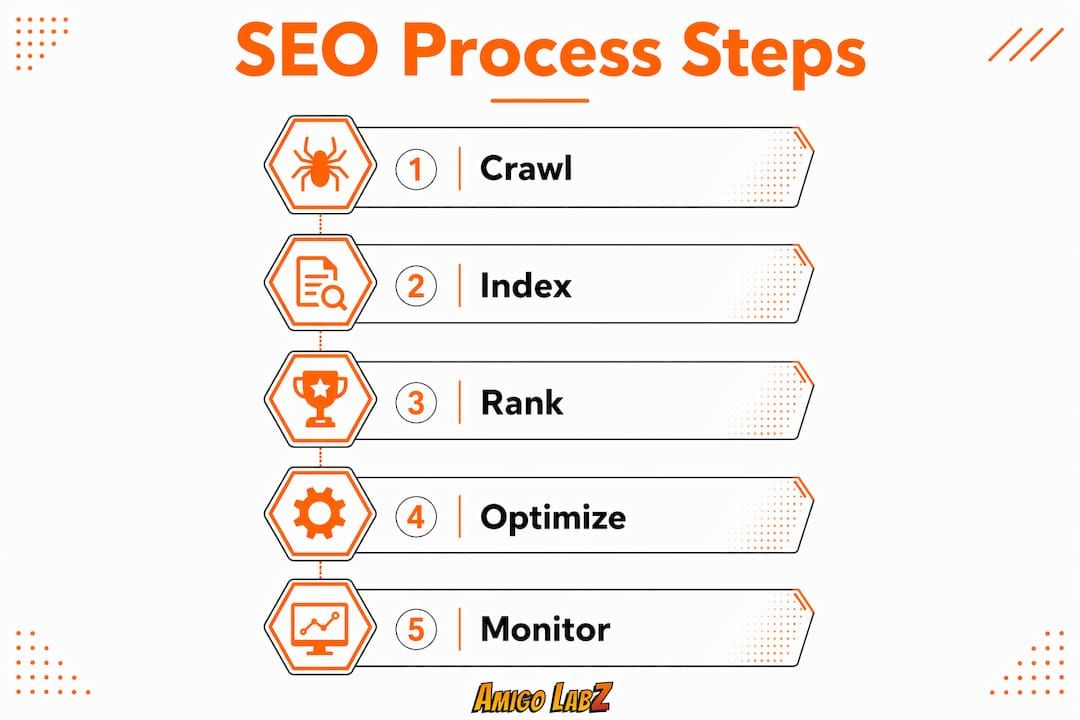
Search engines follow three core steps: crawling, indexing, and ranking. Crawling means a search engine bot visits your pages and reads their content. Indexing means that content gets stored in a massive database. Ranking means the engine decides which pages to show, and in what order, when someone types a query.
Google's algorithms evaluate content quality, site speed, mobile friendliness, and dozens of other factors to determine rank. No single factor wins. Google weighs them together to decide which page best answers a searcher's intent.
Relevance and authority are the two biggest ranking signals. Relevance means your content directly answers what the user searched for. Authority means other credible websites link to yours, signaling that your content is trustworthy.
User experience factors like clear site structure, fast load times, and attractive content presentation play a growing role in rankings. Google's Core Web Vitals measure exactly these signals. A slow, cluttered site loses ranking ground even when its content is strong.
- Crawlability: Search bots must be able to access every important page on your site.
- Indexing: Pages blocked by robots.txt or missing sitemaps will not appear in results.
- Relevance: Content must match the intent behind the search query, not just the words.
- Authority: Backlinks from reputable sites signal trust to Google.
- User experience: Speed, mobile layout, and readability all affect how Google scores your pages.
Pro Tip: Use Google Search Console to check which pages Google has indexed and spot crawl errors before they hurt your rankings.
What are the three pillars of SEO?
SEO consists of three main pillars: technical SEO, on-page SEO, and off-page SEO. Each pillar handles a different part of your site's performance. Neglecting any one of them limits the effectiveness of the other two. Think of them as legs on a stool. Remove one and the whole thing falls.

For a full breakdown of how these categories fit into types of SEO in digital marketing, each pillar serves a distinct function.
| Pillar | Focus | Example Tasks |
|---|---|---|
| Technical SEO | Site infrastructure and accessibility | Site speed, HTTPS, mobile-friendliness, sitemaps |
| On-Page SEO | Content quality and relevance | Keyword placement, headings, meta descriptions, internal links |
| Off-Page SEO | Authority and trust signals | Backlinks, brand mentions, guest posts |
Technical SEO
Technical SEO covers everything that makes your site accessible to search engines and fast for users. Site speed, mobile-friendliness, secure HTTPS, and proper indexing are all technical SEO responsibilities. A technically sound site gives your content the best possible chance of ranking. Without it, even excellent content can go unnoticed.
On-page SEO
On-page SEO focuses on what users and search engines see on each page. This includes your headings, body copy, images, internal links, and meta descriptions. The goal is to make each page clearly relevant to a specific search query. Amigolabz recommends starting with on-page optimization techniques before tackling more advanced strategies.
Off-page SEO
Off-page SEO builds your site's reputation outside your own domain. Building high-quality backlinks and brand mentions enhances your site's authority in the eyes of search engines. Quality matters far more than quantity here. One link from a respected industry publication outweighs fifty links from low-traffic directories.
How has AI changed SEO in 2026?
AI has reshaped how Google surfaces information without changing what Google fundamentally rewards. Google's AI-powered search features retrieve content from the same indexes built by traditional ranking systems. Good SEO remains the foundation of visibility, even when the answer appears in a generative summary rather than a blue link.
The biggest shift is that Google now rewards topical authority more aggressively. A business that publishes deep, expert content on a narrow subject earns more visibility than one that publishes shallow content on many subjects. Breadth without depth no longer works.
"The shift from 'gaming' search algorithms to creating relentlessly helpful, authentic content is the best formula for SEO success in the AI era." — Think with Google
Keyword stuffing and thin content are not just ineffective in 2026. They actively damage rankings. Google's systems are trained to detect content written for algorithms rather than people. Businesses that focus on genuine expertise and original perspectives get cited by AI systems. Those that chase shortcuts get filtered out.
Pro Tip: To build topical authority, publish a cluster of related articles on your core subject rather than isolated posts. Google rewards sites that demonstrate depth across a topic, not just a single well-optimized page. Check out how AI for SEO is already benefiting local businesses in New Jersey and Nevada.
What practical steps should you take to start doing SEO?
SEO for beginners starts with a clear, repeatable process. The steps below apply whether you run a local service business in New Jersey or an e-commerce store serving customers nationwide.
-
Conduct keyword research. Keyword research is the foundational step in any SEO strategy. Use tools like Google Keyword Planner, Ahrefs, or Semrush to find terms your customers actually type into search engines. Focus on intent: a person searching "emergency plumber Newark NJ" wants to hire someone now, not read a blog post.
-
Create helpful, trustworthy content. Write content that fully answers the questions your audience is asking. Cover the topic with depth and accuracy. Cite credible sources. Google rewards content that demonstrates expertise, authoritativeness, and trustworthiness, a framework Google calls E-E-A-T.
-
Optimize your on-page elements. Place your target keyword in the page title, the first heading, and naturally throughout the body. Write a clear meta description under 160 characters. Use descriptive alt text on images. Structure your content with H2 and H3 headings so both users and crawlers can follow the logic.
-
Fix your technical SEO. Run a site audit using a tool like Ahrefs or Screaming Frog. Fix broken links, submit an XML sitemap to Google Search Console, and confirm your site loads over HTTPS. Check your Core Web Vitals scores and address any pages that load slowly on mobile.
-
Build credible backlinks. Reach out to industry publications, local business directories, and partner organizations for links. Write guest posts on relevant blogs. Sponsor local events that list your business on their website. Each quality link tells Google your site is worth ranking.
-
Monitor and adjust. Track your rankings, organic traffic, and click-through rates in Google Search Console and Google Analytics. SEO is not a one-time task. Review your performance monthly and update content that has dropped in rankings.
For a deeper look at SEO best practices for small business owners, Amigolabz has published a dedicated guide covering 2026-specific tactics.
Key takeaways
SEO requires technical, on-page, and off-page execution working together, and AI-era search rewards genuine expertise over algorithmic shortcuts.
| Point | Details |
|---|---|
| SEO drives organic growth | Unlike paid ads, organic rankings deliver consistent traffic without ongoing cost. |
| Three pillars must align | Technical, on-page, and off-page SEO each handle a distinct function and all three are required. |
| AI rewards real expertise | Google's AI features still pull from ranked content, so quality and topical authority remain the priority. |
| Keyword research comes first | Understanding what your customers search for shapes every other SEO decision you make. |
| Monitor performance monthly | Rankings shift over time; regular review and content updates protect and grow your visibility. |
Why I think most business owners start SEO backwards
After working with business owners across New Jersey and Nevada, I see the same pattern repeatedly. They invest in content before fixing their technical foundation. They publish ten blog posts on a slow, poorly structured site and wonder why nothing ranks. The content is often good. The infrastructure underneath it is broken.
The second mistake is treating SEO as a campaign rather than a system. Paid ads have a clear on/off switch. SEO does not work that way. The businesses that win in search are the ones that publish consistently, fix issues as they find them, and build authority month after month. There is no shortcut that holds up over time.
AI has not made SEO harder. It has made it more honest. Businesses with real expertise, genuine customer focus, and well-structured sites are getting more visibility, not less. The businesses struggling are the ones that relied on thin content and low-quality links. That playbook was always fragile. AI just exposed it faster.
My advice to any business owner starting SEO in 2026: fix your technical foundation first, then create content that answers real customer questions with real depth. Do not wait until you have a perfect strategy. Start with one well-researched page and build from there. Consistent, patient effort compounds in ways that no ad budget can replicate.
— John
Amigolabz can build your SEO foundation
Amigolabz works with business owners across the country, with offices in New Jersey and Nevada, to build SEO strategies that match real business goals. The team handles technical audits, on-page content optimization, and off-page link building so you do not have to manage three separate disciplines at once.

Every client starts with a clear picture of where their site stands and what it will take to rank for the terms that matter to their business. Amigolabz builds relationships first and delivers strategies that fit your industry, your market, and your growth timeline. If you are ready to improve your search rankings, explore professional SEO services or book a call to talk through your goals with the team.
FAQ
What is SEO in simple terms?
SEO is the practice of improving your website so it appears higher in search engine results when people search for products or services you offer. Higher rankings mean more visitors without paying for ads.
How long does SEO take to show results?
Most businesses see meaningful ranking improvements within three to six months of consistent SEO work. Competitive industries or newer websites may take longer to build authority.
What is the difference between on-page and off-page SEO?
On-page SEO covers what is on your website, including content, headings, and site structure. Off-page SEO covers external signals like backlinks and brand mentions that build your site's authority.
Does SEO still matter with AI search?
Yes. Google's AI features pull from the same ranked content as traditional search results. Strong SEO is still the primary factor that determines whether your content gets surfaced by AI-powered answers.
How do I start SEO for my business?
Start with keyword research to understand what your customers search for, fix any technical issues on your site, and create content that fully answers those search queries. Tools like Google Search Console and how to rank higher on Google provide a practical starting point.
Recommended