5 Channels to Grow Small Business Website Traffic in 90 Days
5 Channels to Grow Small Business Website Traffic in 90 Days

The fastest way to generate traffic to your website is to run five channels at once, not one channel perfectly: technical SEO and content, organic social, email capture, and referral outreach, all tracked weekly in Google Search Console and GA4 inside a 90-day plan. Expect impressions within 4 to 8 weeks, first real clicks by months three to five, and compounding growth by month six to twelve. Skip the shortcuts. Prioritize by impact-to-effort instead.
TL;DR:
- Prioritize fixing indexing and poor CRO issues first, as these provide immediate visibility improvements and prevent wasted efforts on unindexed pages.
- Focus content efforts on mapping one primary keyword per page, creating a pillar post with supporting content, and internal linking to establish site authority and relevance.
- Use social media to repurpose content, engage in relevant niche groups, and maintain consistent directory listings to boost engagement and referral traffic.
- Build a high-impact, targeted 90-day plan starting with technical fixes and content creation, then expanding outreach and content repurposing once foundational elements are in place.
- Track impressions and rankings weekly in Search Console and GA4 to identify early signs of growth or issues, adjusting tactics before rankings decline or traffic stalls.
How Do You Prioritize Tactics That Generate Traffic to Your Website?
Not every traffic tactic deserves your Monday morning. Some fix a problem blocking everything else. Others take three months to pay off and should be scheduled, not chased. Here's the order that actually works, ranked by impact relative to the effort it takes to execute.
-
Fix indexing and glaring CRO problems first. If Google can't crawl your pages, or your phone number is buried in a footer nobody reads, nothing else matters. Open Search Console, check the Pages report, and fix any accidental "noindex" tags today. Time to first result: immediate for indexing, days for CRO.
-
Map one primary keyword to one or two pages. Pick a page that already gets some traffic and confirm what it's actually trying to rank for. A page that tries to be everything ranks for nothing. Time to result: weeks.
-
Publish one pillar page plus two supporting posts. This is the single highest-leverage content move for a small site. Time to result: 4 to 8 weeks for impressions, per Groundwork's founder guide.
-
Add three internal links from existing pages to the new pillar. Free, five minutes, and it tells search engines which page matters most in that cluster. Time to result: days to weeks.
-
Submit your sitemap and request indexing on key URLs. A five-minute task inside Search Console that removes the single biggest bottleneck to visibility, according to The Rank Masters. Time to result: days.
-
Repurpose one blog post into a short video. Cut your best-performing post into a 60-second clip with a caption that drives back to the page. Time to result: days for engagement, weeks for referral clicks.
-
Pitch three resource pages for a mention. Find pages that already link to businesses like yours and ask to be added. Time to result: 2 to 4 weeks, depending on response rate.
Do the first five this week. Schedule six and seven for week two. You don't need all seven tactics running simultaneously. You need the first three moving before you touch anything else.
How Should You Plan Content That Actually Drives Traffic?
Start with keywords, not topics. Pick 15 to 20 seed keywords tied to what you actually sell, then tag each one by intent: informational, navigational, commercial, or transactional. A plumber writing "how to unclog a drain" (informational) needs a different page than "emergency plumber near me" (transactional). Confusing the two wastes a page's entire potential.
Run each keyword through a simple difficulty filter: search it, and if the top results are national brands with hundreds of linking domains, skip it for now. If the results are local competitors, thin content, or forums, that's a page you can realistically outrank. Map exactly one primary keyword per page. Two pages competing for the same term split your own authority.
Build topic clusters, not scattered posts. A pillar page covering your core service broadly, supported by three to five posts that go deep on specific angles, beats fifteen unrelated blog posts every time. Small sites win by owning a narrow segment with depth and maintenance rather than spreading thin across dozens of topics. Link every supporting post back to the pillar, and link the pillar out to each support. That internal structure tells search engines and readers alike what your site is actually about.
Write answer-first, every time. Whatever question your H1 or title promises to answer, answer it in the first two sentences under that heading. Then explain. This isn't just good manners for a reader scanning on a phone. It's how AI answer engines pull content into responses. Structuring pages this way is a core GEO tactic worth adopting now, since AI referrals increasingly target home pages, product pages, and about pages that state their point clearly and early.
Use clear H2s phrased as real questions where it fits naturally. Add FAQ schema to pages that answer common, discrete questions. It costs nothing and gives search engines a structured hook to cite.
Run through this on-page checklist for every published page:
- Title tag under 60 characters, primary keyword near the front
- Meta description that states the specific benefit, not a vague teaser
- One H1, logically nested H2s and H3s underneath
- Descriptive alt text on every image (not "image1.jpg")
- Three or more internal links pointing to related pages
- A canonical tag if the same content exists at more than one URL
Pro Tip: Don't chase every keyword you find. New domains do better focusing on one vertical with 8 to 12 solid commercial pages plus supporting content, with every page reachable within three clicks of the homepage. Depth beats breadth almost every time on a small site.
Content maintenance matters as much as publishing. Instead of refreshing pages on a calendar, use impressions and citation signals to decide what needs attention. If Search Console shows a page picking up impressions but stuck ranking positions 8 through 20, that page is close. A rewrite, an added section, or three new internal links can push it into the top ten. If a page shows zero impressions after two months, the keyword mapping was probably wrong. Fix the target, don't just add words.
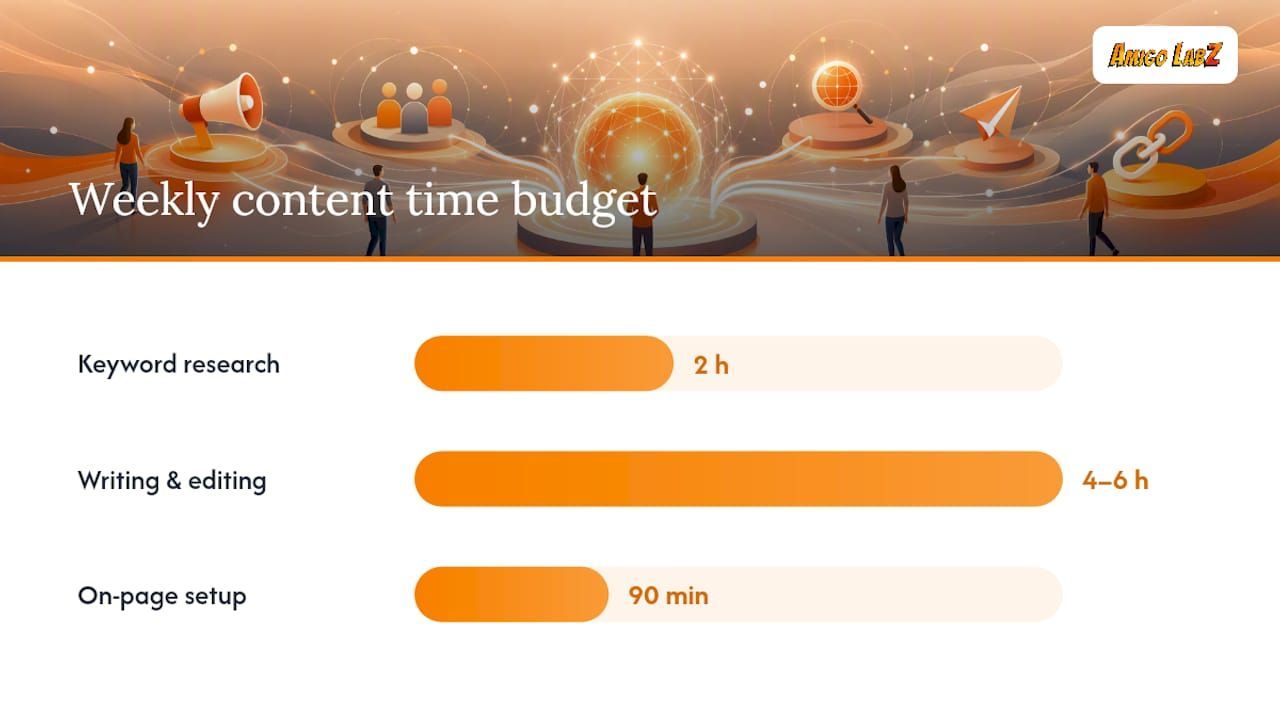
For a small team, budget two hours for keyword research and outlining, four to six hours for writing and editing an 1,200 to 1,800 word pillar post, and 90 minutes for on-page setup and internal linking. That's a realistic week for one solid piece of content, not five thin ones. For more on structuring pages technically, see this small business SEO guide.
Why Does Social Media Outperform Search for Small Businesses?
Because it's where the audience already is, and it doesn't require ranking against a decade-old competitor page. Social media is the top traffic source for 64% of small businesses, ahead of organic search at 52% and referrals at 51%. That doesn't mean skip SEO. It means don't wait on SEO alone while ignoring the channel that's already working for most businesses your size.
Choosing a platform isn't about being everywhere. It's about matching where your specific customer actually spends time, then repurposing content into that platform's native format rather than posting the same link everywhere and hoping.
- Repurpose blog content into short video. A 500-word blog post on preparing a home for a move becomes a 45-second video showing the three biggest packing mistakes, with a caption linking to the full pillar page.
- Turn posts into threads or carousel posts. Break a listicle-style post into five slides or a numbered thread; each slide is a reason to click through for the full version.
- Add a specific CTA to every post , not "link in bio" but "full checklist on our site" pointing at the pillar page, not the homepage.
- Join niche groups and forums where your customers already ask questions. Answer genuinely, and only link back when it's the actual best answer, not every time.
- Participate in resource-page communities and local business groups. These generate both referral clicks and the kind of unlinked mentions that later become link opportunities.
Directory and review listings matter more than most business owners assume. A Google Business Profile, Yelp listing, and industry-specific directory entry that all list the same business name, address, and phone number create consistency that referral traffic and AI answer engines both reward. Inconsistent listings (a different phone number on one directory, a closed status on another) quietly bleed both referral clicks and citation trust. Clean listings are a 30-minute task with a long tail of payoff.
How Do You Turn One-Time Visitors Into Repeat Traffic?
Every visitor who leaves without giving you an email address is a visitor you have to win back from scratch, usually through the same expensive channel that brought them the first time. A short list of people who already said yes once is worth more than a spike in cold traffic.
- Build one lead magnet, not five. A single-page checklist, a pricing guide, or a "what to expect" PDF tied directly to your pillar page's topic converts better than a generic newsletter signup.
- Use a simple content upgrade instead of an aggressive popup. Offer the checklist inside the blog post itself, timed to appear after someone scrolls past the intro, not the second they land.
- Deliver digital downloads through a dedicated platform like BananaSpace if you're selling a paid guide, template, or resource rather than giving everything away free.
- Send a newsletter every two weeks, not daily. Recap your best new content, one quick tip, and one soft CTA. Consistency beats frequency for a small list.
- Repurpose existing content for email rather than writing new material from scratch; your best blog post from three months ago is new information to 90% of your list.
- Run one local event or webinar per quarter to build a list quickly. A 20-minute webinar with 15 attendees, all opted in with an email, builds a more engaged list than a year of passive blog traffic.
Partnering with another local business for a joint webinar or event splits the promotion work and doubles the audience exposed to your name. This is slower to set up than a popup, but it produces a warmer, higher-intent list than almost any paid tactic.
What Technical Fixes and CRO Changes Matter Most?
Traffic that lands on a page Google can't index, or a page that's slow enough that half the visitors leave before it loads, is traffic you paid for (in time or money) and then threw away. Fix eligibility before you spend another hour on content, since eligibility unlocks faster visibility for everything published after it.
Indexing and eligibility checks:
- Submit an updated sitemap in Search Console and confirm it's processed without errors.
- Use the URL Inspection tool on your top five pages to confirm each one is indexed, not just submitted.
- Check for accidental canonical tags pointing to the wrong URL, or a stray noindex tag left over from a staging site.
Speed and Core Web Vitals:
- Compress images before upload; a 4MB photo on a services page is a common, invisible speed killer.
- Use modern image formats like WebP where your platform supports them.
- Lazy-load images below the fold so the page's initial load isn't waiting on content nobody's scrolled to yet.
Page speed and clearly visible CTAs materially affect conversion, which means a fast page that never asks for the sale is still leaving money on the table.
Mobile-first checks:
- Load every key page on an actual phone, not just a browser's mobile preview, and check that tap targets aren't overlapping.
- Confirm forms render correctly and don't require horizontal scrolling to complete.
CRO quick wins:
- Put your phone number and a "Get a Quote" button in the header, visible without scrolling.
- Cut form fields to the minimum needed for a first conversation; every extra field drops completion rate.
- Add a testimonial or review count near the CTA, not buried on a separate page.
Full detail on these fixes lives in this conversion optimization guide and this design-driven CRO resource.
Minimum tracking stack: Google Search Console shows what's indexed, what queries you're showing up for, and where you rank. GA4 shows what people do once they land, including which pages convert and where they drop off. Neither tool alone tells the full story; together they show you both sides of the traffic equation.
Which Outreach Tactics Actually Build Links for Small Sites?
Most link-building advice is written for sites with a marketing team and a budget. Small businesses need targets they can hit in a few hours a month, not a full-time campaign.
-
Search for unlinked brand mentions. Search your business name in quotes and see who's mentioned you without linking. A quick, polite email asking them to add a link converts at a notably high rate, since they've already decided you're worth mentioning.
-
Pitch resource pages in your niche. Search "[your industry] resources" or "[your city] business links" to find curated lists, then ask to be added with a specific reason why you fit.
-
Write one niche guest post per month , targeting a site your actual customers read, not a generic marketing blog looking for filler content.
-
Reply to HARO or similar journalist request platforms with a specific, quotable answer, not a generic pitch. Journalists ignore vague responses instantly.
A working outreach email runs about 80 words: one specific compliment about their page, one clear ask, and a link to the exact resource you want listed. That's the pattern that converts for small sites without a name-brand reputation to lean on.
Set a monthly target of ten outreach emails and expect two to three positive responses. Measure ROI by tracking new referring domains in Search Console's Links report, not by counting emails sent. A site with 40 quality referring domains after six months of steady outreach is in a stronger position than one with 40 rejected pitches and nothing to show.
What Metrics Actually Tell You a Tactic Is Working?
Search Console and GA4 together are the only measurement stack a small site needs, and reviewing them for 30 minutes a week catches problems before they become months-long ranking losses.
Search Console shows impressions, average position, and the actual queries triggering your pages. GA4 shows what happens after the click: which pages convert into a form fill or a phone call, and where visitors give up.
Leading indicators to watch weekly:
- Impressions climbing on a page, even before rankings move, means Google is starting to trust it.
- Keywords moving from position 8 to 20 into the top 10 signal a page that's close to a breakthrough with one more push.
- A page with high impressions but a low click-through rate usually has a weak title tag or meta description, not a ranking problem.
Run a three-point weekly check: impressions trend, new queries appearing, and any indexing errors flagged in Search Console. Once a month, go deeper: check the conversion funnel in GA4, confirm your top pages are still indexed, and note which pages are showing up in AI-generated answers if you can spot the referral pattern in your traffic sources.
One distinction trips up almost every small business owner watching their numbers: a drop in sessions is not the same as a drop in visibility. If your rankings hold steady but sessions fall, check whether an AI answer engine is now answering the question directly in its own interface, a pattern sometimes called AI interception. That's different from an actual ranking loss, and it calls for a different fix. Structuring your top pages for direct extraction (clear answers, structured headings) is the response to interception. Rebuilding content and backlinks is the response to a real ranking drop. Confusing the two wastes a month chasing the wrong fix.
What's a Realistic 90-Day Plan for Growing Traffic?
A scoped, week-by-week plan beats an open-ended to-do list because it forces sequencing. Foundations first, then compounding tactics, then amplification. Trying to do all three at once is how most small business traffic plans stall by week three.
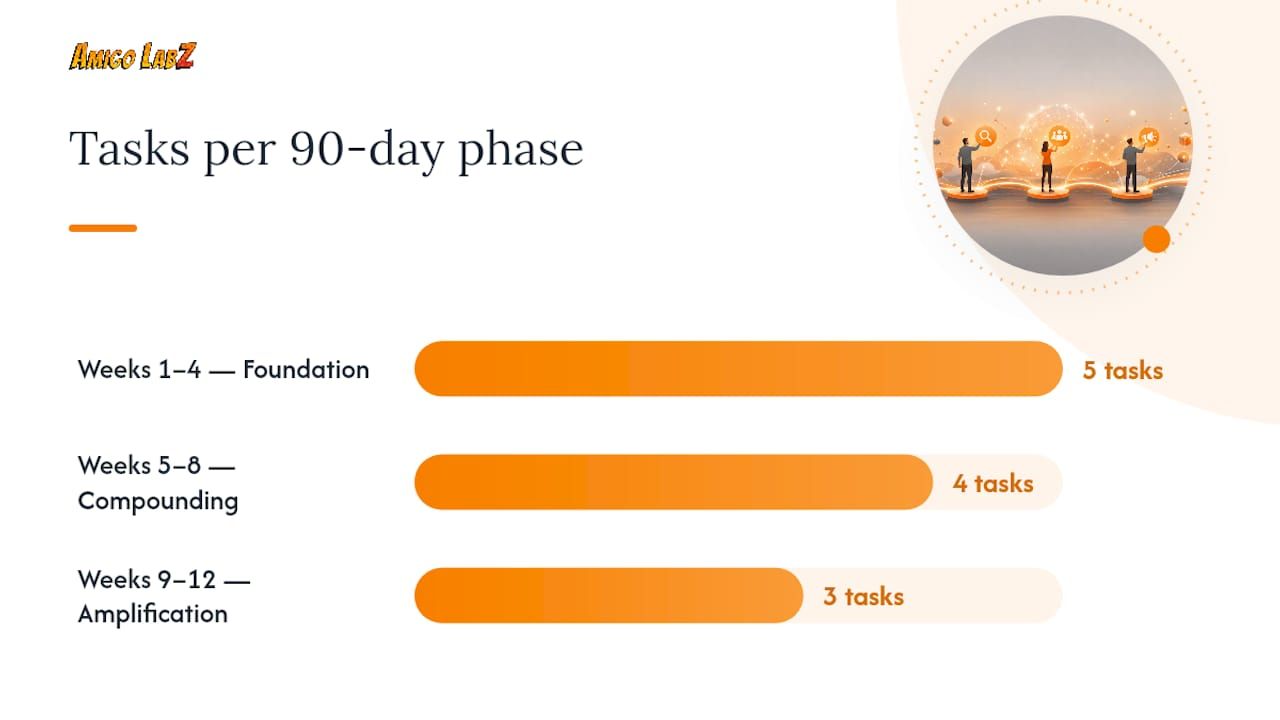
Weeks 1 to 4: Foundation
- Run the technical audit: sitemap, indexing, canonical tags, mobile rendering.
- Publish one pillar page and two supporting posts on your highest-priority topic.
- Submit the sitemap and request indexing on new and existing key pages.
- Send your first five outreach emails targeting unlinked mentions and resource pages.
- Clean up your top three directory listings for consistency.
Weeks 5 to 8: Compounding 6. Add three to five internal links between the pillar and its supports, and to older relevant pages. 7. Continue outreach at a rate of ten emails per month, tracking responses. 8. Repurpose your best-performing post into one short video and two social posts. 9. Add FAQ schema and structured data to your top three pages.
Weeks 9 to 12: Amplification 10. Publish one niche guest post on a site your customers actually read. 11. Pitch three more targeted resource pages based on what worked in weeks 1 to 4. 12. Refresh your highest-impression, lowest-position page using the Search Console data from month two.
Budget four to six hours a week if you're doing this yourself alongside running the business. That's realistic for weeks 1 through 8. By week nine, most solo owners are stretched thin, and that's the honest signal to bring in help, not a failure of the plan itself. If impressions aren't moving by week eight despite consistent execution, or if you simply don't have four hours a week to give this consistently, that's the point to consider a done-for-you option instead of pushing through alone.
Pro Tip: Track one client-facing proof point from month one (a review, a completed project photo, a specific result) and use it in your outreach emails and social posts starting in month two. Real, specific proof converts better than a generic "trusted by local businesses" line ever will.
What Small Businesses Get Wrong About Traffic Growth
The biggest mistake I see is volume-first publishing: businesses churn out posts because "more content" feels like progress, without ever checking whether those pages have any keyword behind them. Twenty thin posts rarely outperform three deep ones mapped to real search intent.
The second mistake is treating measurement as optional. Owners who skip Search Console entirely have no idea whether their content problem is a ranking problem, a conversion problem, or an AI-interception problem, and they end up guessing at fixes for months.
The third is skipping conversion optimization because traffic feels like the finish line. It isn't. A slow page with a buried phone number turns real, hard-won traffic into a bounce statistic.
If you take one thing from this guide, take this: pick one tactic from the priority shortlist, run it for two weeks, and actually check the numbers before adding a second one. Sequencing beats enthusiasm every time.
— John
How Amigolabz Can Help You Grow Traffic Without the Guesswork
This type of service is the alternative to figuring all of this out alone, especially once week nine hits and the DIY plan above starts competing with actually running your business. It builds and manages the exact pieces covered here: website design built for indexing and conversion from day one, local and organic SEO with keyword mapping and content clusters, Google Ads management for when paid traffic needs to fill the gap while organic compounds, and ongoing WordPress maintenance so technical issues get caught before they cost you rankings.

DIY makes sense if you have four to six consistent hours a week and enjoy the mechanics of SEO and content. Hiring makes sense the moment impressions stall, the technical checklist feels overwhelming, or the business is growing faster than your available hours. Amigolabz works with small and medium-sized businesses in New Jersey and Nevada, from moving companies to plumbers to wellness practices, on exactly this kind of prioritized traffic work. If you'd rather hand off the 90-day plan than run it solo, book a call with Amigolabz to talk through where your site stands today and what a done-for-you plan would look like.
Where to Learn More About Growing Website Traffic
For deeper reading on the tactics above, a handful of sources are worth bookmarking. The Groundwork Bootstrapped Founder Guide covers realistic SEO timelines in more depth than most agency blogs will admit to. The Big SMB Website Trends Report from WordStream breaks down where small business traffic actually comes from, channel by channel. The Rank Masters' organic traffic playbook is a solid reference for eligibility and indexing fixes specifically. For a primer on how AI answer engines are reshaping optimization, this GEO explainer is worth the fifteen minutes. And for readers who want a broader SEO foundation before tackling the tactics above, this small business SEO primer fills in the basics.
Sources
FAQ
How long does it take to generate traffic to your website?
Expect first measurable impressions in Search Console within 4 to 8 weeks, real clicks by months three to five, and compounding growth by month six to twelve if you stay consistent.
Should I focus on SEO or paid ads first?
Start with the free, foundational fixes (indexing, one pillar page, social repurposing) since they build assets that keep working after you stop paying for them; layer in Google Ads once you know which pages actually convert.
What's the single highest-impact tactic to start with?
Fixing indexing and crawlability issues comes first, since a page that isn't indexed can't rank no matter how good the content is; publishing one well-mapped pillar page comes right after.
Do I need Google Search Console and GA4, or just one?
Use both. Search Console shows what you're ranking for and whether pages are indexed; GA4 shows what visitors do once they arrive, and neither tool covers what the other one does.
How much traffic can I expect from social media compared to search?
Social media is the top traffic source for 64% of small businesses, ahead of organic search at 52%, so it's worth running alongside SEO rather than treating it as secondary.
When should I hire help instead of doing this myself?
If impressions stall past week eight of consistent effort, or you can't reliably give this four to six hours a week, that's the signal to bring in a team like Amigolabz rather than stretching the DIY plan further.
Recommended