12 Steps to Boost Google Ranking for Website Owners This Week
12 Steps to Boost Google Ranking for Website Owners This Week

To increase your website ranking on Google, focus first on people-first content, technical hygiene (crawlability and speed), and real editorial links, then measure what happens and adjust. Google Ads won't buy you a spot in organic results, only relevance, usability, and expertise signals do. SEO compounds over months, not days; learn how to boost organic traffic naturally for lasting results.
TL;DR:
- Building a few high-quality, legitimate backlinks from authoritative sites can help new domains get reliably indexed with just three to five links.
- Fixing crawl errors, optimizing titles, and ensuring pages are mobile-friendly and fast are foundational steps that impact rankings within weeks.
- Auditing existing content for helpfulness and relevance is more beneficial than chasing backlinks or features for sites struggling to rank.
- Avoid blocking important pages with robots.txt or duplicate content issues, as these prevent Google from seeing and ranking your pages properly.
- Consistently monitoring Search Console impressions, position, and crawl status reveals the true health of your SEO efforts and guides what to fix next.
How Do I Get My Website to Rank Higher on Google?
Ranking gains come from stacking small, correct actions in the right order rather than chasing one silver bullet. Here's the sequence that produces results fastest, based on how Google's own starter guide prioritizes signals.
- Clarify search intent for your top pages. Look at what's already ranking for your target terms; if it's product pages and you have a blog post, you're fighting the wrong battle.
- Audit your core content for helpfulness. Cut thin pages, merge duplicates, and rewrite anything that reads like it was written for a search engine instead of a person.
- Fix titles and meta descriptions. Every page needs a unique, descriptive title tag; vague ones ("Home," "Services") are wasted real estate.
- Improve page speed. Compress images, enable caching, and trim anything blocking the first render.
- Confirm mobile friendliness. Test your key pages on an actual phone, not just a browser resize.
- Resolve crawl and index errors. Check Search Console's Coverage report for pages marked "Excluded" or "Error."
- Add structured data where it fits. Schema markup for products, reviews, or FAQs can unlock rich results in search listings.
- Build internal links between related pages. A blog post with zero internal links is an orphaned asset.
- Earn a handful of legitimate backlinks. New domains often need only three to five real external links to get reliably indexed.
- Request indexing for updated or new pages. Use URL Inspection in Search Console after major changes.
- Monitor Search Console weekly. Watch impressions and average position, not just clicks.
- Reassess and refresh quarterly. Rankings drift; content that worked in January can slide by summer.
Do these roughly in order. Skipping the content audit to chase backlinks is the most common way teams waste a quarter.
What Makes Content Rank on Google?
Content ranks when it answers the searcher's actual question better than the ten results already sitting on page one. That means matching format to intent first: someone searching "how to fix a leaky faucet" wants a guide, not a product page, while "buy kitchen faucet" wants exactly the opposite. Map each target keyword to one page, note the supporting keywords it should also cover, and write the page for that specific job.
Once intent is settled, structure matters. Headings should mirror how a reader scans, not how a writer outlines.
- Use one clear H1 and logical H2s that match subtopics people actually search for
- Add original data, photos, or examples competitors haven't published
- Include multimedia (video, tables, images) where it clarifies rather than decorates
- Kill templated boilerplate that repeats across every service page on your site
Pro Tip: Before publishing, ask whether the page would still be useful if Google didn't exist. If the honest answer is no, it's not ready.
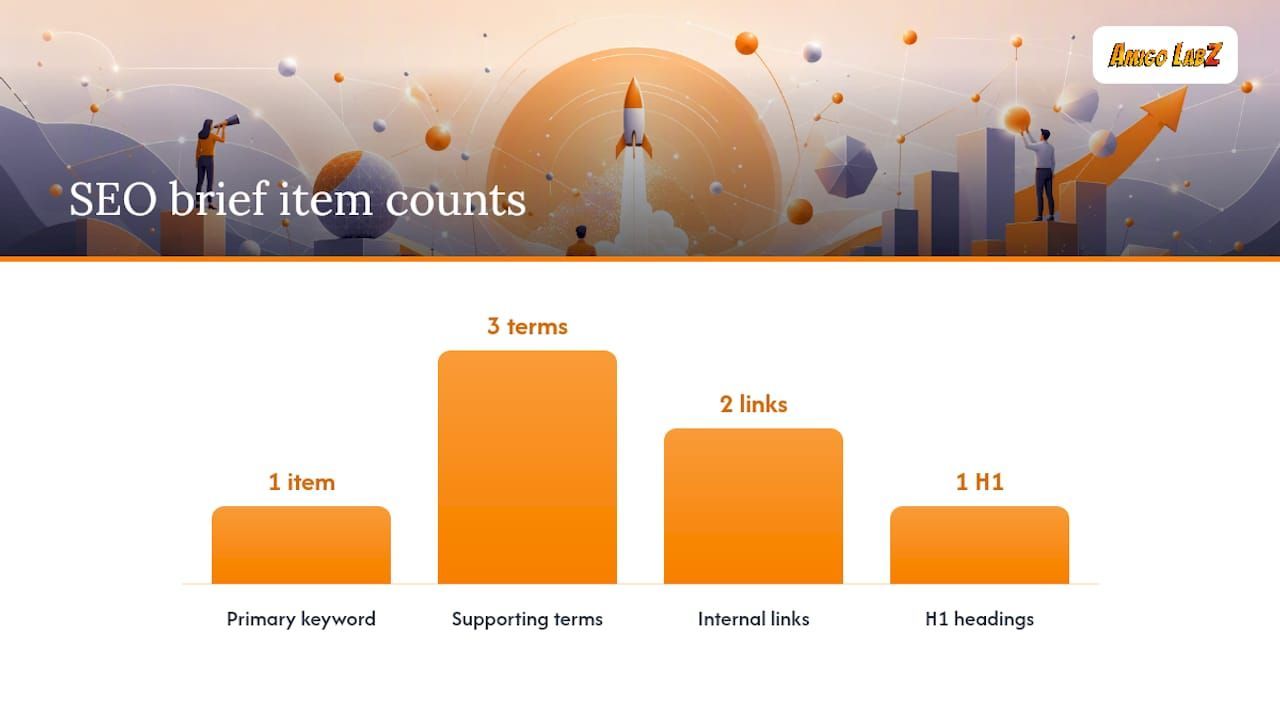
For a practical brief, list the primary keyword, three supporting terms, the target reading level, and two internal links to add. Review core pages every 90 days; Google's ranking systems weigh relevance and expertise differently by query type, so a page that ranked well last year can lose ground as competitors update theirs. For deeper guidance on building these briefs, Amigolabz's beginner's guide to SEO content walks through the process step by step.
Which Technical Fixes Actually Move Rankings?
Technical SEO is the unglamorous half of the job, and it's where most sites bleed points without realizing it. Start with Core Web Vitals: compress images to modern formats like WebP, enable browser caching, and inline critical CSS so the page renders before every script loads. Slow pages don't just frustrate visitors; they signal poor usability to Google's ranking systems.
Crawlability comes next. Submit a clean XML sitemap, keep robots.txt from blocking pages you actually want indexed, and set canonical tags correctly to avoid duplicate-content confusion.
- Check that robots.txt isn't accidentally blocking CSS, JS, or entire sections
- Set self-referencing canonical tags on pages you want indexed
- Confirm HTTPS is active sitewide, not just on the homepage
- Add schema markup for products, articles, or FAQs to enable rich search features
One detail trips up more sites than it should: if you block a page with robots.txt, Google can't see a noindex tag on that same page. If you want a page excluded, use page-level noindex instead of a blanket robots.txt block, or the two directives cancel each other out. Run your key URLs through Search Console's URL Inspection tool monthly. It tells you exactly how Googlebot sees the page, which beats guessing.
How Do You Build Links Without Getting Penalized?
Editorial links still carry more weight than almost anything else you can do, but they have to be earned, not bought or swapped in bulk. Original research, a genuinely useful tool, or a well-argued opinion piece attracts links naturally; a generic "top 10" listicle rarely does. Reasonable outreach tactics include pitching journalists a data point from your own analytics, partnering with adjacent (non-competing) local businesses for co-promotion, and guest posts on sites your actual customers read.
- Build hub pages that group related content and link out to supporting articles
- Link new pages from your highest-authority existing pages within a week of publishing
- Avoid link farms, paid link networks, and reciprocal-linking schemes entirely
- Use
rel="nofollow"orrel="sponsored"on paid or user-generated links to stay compliant
Releasing new pages in themed batches and linking them from a hub page speeds up indexing and keeps topical authority concentrated rather than scattered.
How Do I Know If My SEO Is Actually Working?
Track impressions, clicks, click-through rate, and average position in Search Console weekly; watch sessions and conversions in analytics to see if traffic actually converts. When a page drops, check Coverage and URL Inspection first. Indexing issues cause more silent ranking losses than algorithm changes do.
- Compare average position trends over 90 days, not day to day
- Use Core Web Vitals reports to catch page-experience regressions early
- A/B test title tag changes on one page before rolling changes out sitewide
Pro Tip: Requesting indexing after a major update speeds up crawling but doesn't itself boost rank; save requests for real changes, like new structured data or a rewritten page, not minor typo fixes.
How Long Does It Take to Rank on Google?
Technical fixes can show results in weeks. Content authority builds over months. Meaningful domain-level shifts often take 6 to 12 months or longer. The biggest mistakes: publishing thin pages to hit a quota, blocking crawlers by accident, over-optimizing anchor text, and ignoring mobile experience. Small teams should fix technical basics first, then invest steadily in content and links rather than chasing shortcuts.
What Actually Moves the Needle for Real Clients?
Across client work, the fastest wins almost always come from fixing indexing gaps and titles before touching anything else. Sites sitting on "Crawled, currently not indexed" status usually just need a few honest backlinks and better internal linking to hub pages, not a content overhaul. If you've done the technical basics and still aren't moving, that's the point to bring in a specialist rather than keep guessing; Amigolabz's guide on hiring a search engine ranking company breaks down when that switch makes sense. For DIY-minded owners, the full ranking checklist covers the same ground in more depth.
The Checklist Works. Most People Just Skip Steps
Every SEO guide says "create helpful content," and it's true, but it's not the whole truth. The real gap between sites that rank and sites that stall is sequencing. Teams jump to link building before fixing a robots.txt file that's silently blocking half their site, or they chase featured snippets while their mobile page takes nine seconds to load.
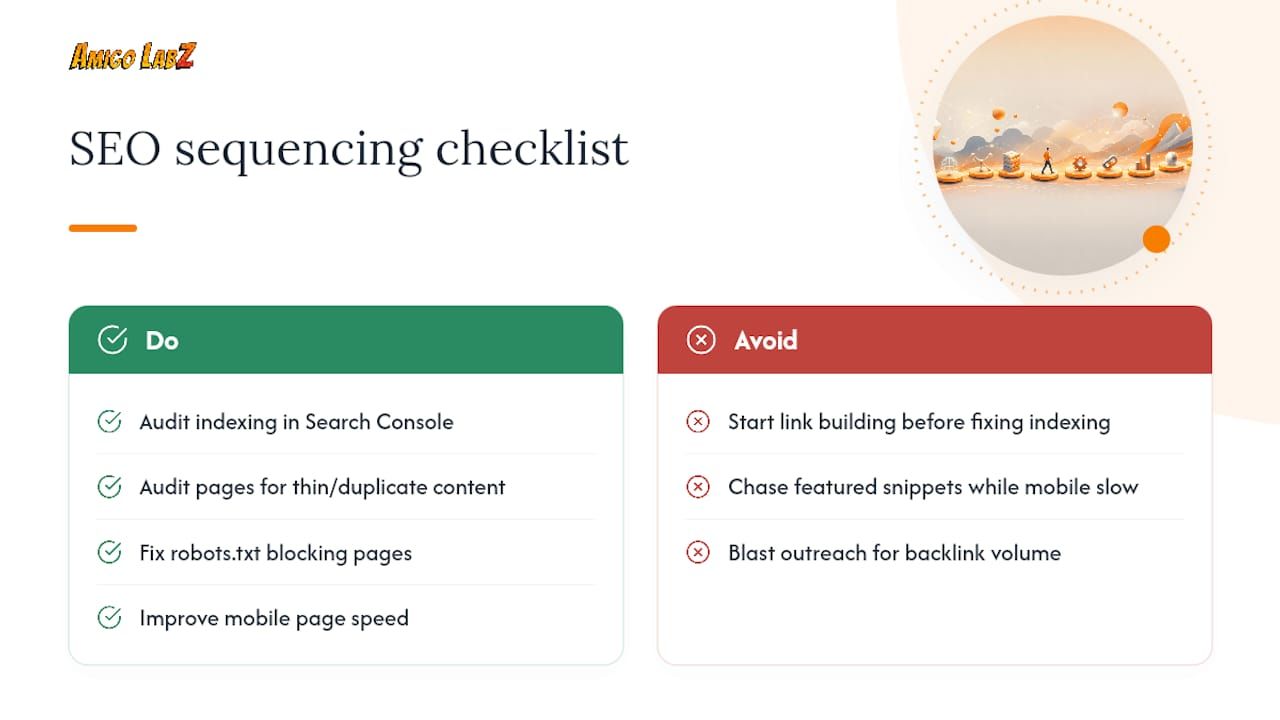
The conventional advice treats SEO like a single lever. It's not. It's ten small levers, and pulling them out of order wastes months. The most overrated tactic right now is chasing backlink volume through outreach blasts. The most underrated is simply auditing existing pages for thin or duplicate content, since Google's own guidance is explicit that helpfulness and expertise carry real weight in ranking decisions.
If you do only one thing this month, audit your indexing status in Search Console. Everything else is wasted effort on pages Google can't see.
— John
Want This Handled Instead of DIY'd?
We provide an alternative to guessing your way through SEO forums and half-finished checklists by following a structured pattern of technical fixes first, then content, then links in our client work.

Here's what that looks like in practice:
- Technical audits covering crawlability, speed, and mobile issues
- Content builds mapped to keyword intent, rather than guesswork
- Local visibility work through Google Business Profile optimization
- Paid search support through Google Ads management while organic authority builds
If your Search Console reports look like a mystery novel, our SEO services start with the exact indexing and content audit described above. Book a free consultation and get a straight answer on where your site actually stands before you spend another month guessing.
Sources
FAQ
How Do I Get My Website to Rank Higher on Google?
Fix technical issues first (crawlability, speed, mobile usability), then build helpful content around real search intent, then earn legitimate backlinks. Rankings improve as these signals compound together, not from any single tactic.
Can I Pay Google to Rank My Website Higher?
No. Paid ads through Google Ads don't influence organic rankings; Ads buy visibility in a separate, clearly labeled section of the results page.
How Can I Improve My Website Ranking?
Audit your content for genuine helpfulness, fix titles and meta descriptions, resolve crawl errors in Search Console, and earn a small number of real editorial backlinks rather than bulk link schemes.
How Can I Get My Website to Index Faster on Google?
Request indexing through Search Console's URL Inspection tool after major updates, and make sure robots.txt isn't blocking pages you want indexed. New sites typically also need a handful of genuine external backlinks to get indexed reliably.
Recommended