Best Dental SEO Company for U.S. Practices in 2026
Best Dental SEO Company for U.S. Practices in 2026

For most U.S. dental practices that want predictable new-patient growth, Amigolabz is the recommended choice. The reason is specific: the agency combines attribution-first reporting with full account ownership, meaning you see exactly which channel booked each patient and you keep every asset when the engagement ends.
If you're ready to act now, book a discovery call or keep reading for the full evaluation framework.
Key Takeaways
The best dental SEO company for a U.S. practice is the one that ties every dollar of spend to a booked patient, hands you full account ownership from day one, and starts with a written audit before any work begins.
| Point | Details |
|---|---|
| Attribution is the differentiator | Demand cost per acquired patient by channel before signing; vendors who can't produce it are selling activity, not results. |
| Pricing range: $500–$3,000/month | Under $500/month rarely funds meaningful work; scope and market competition drive the cost upward. |
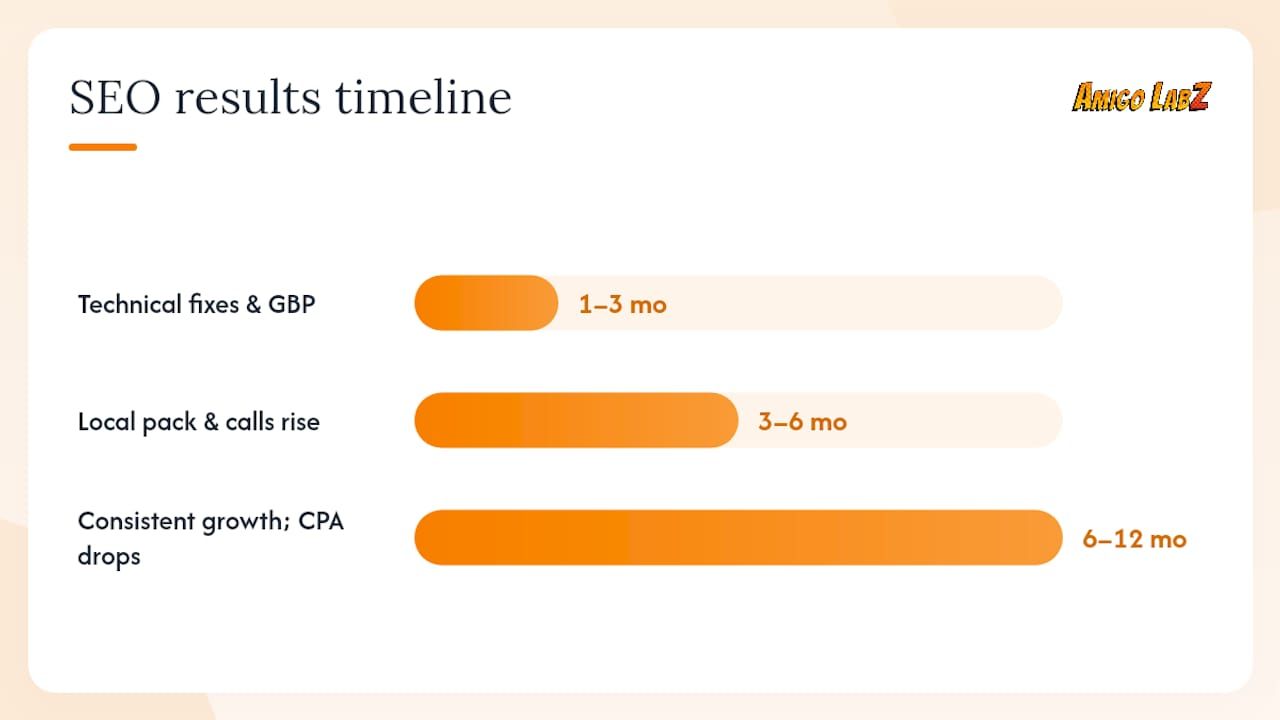
| SEO timeline: 3–12 months | Expect measurable ranking movement in 3–6 months and consistent new-patient growth by 6–12 months. |
| Account ownership in writing | Confirm you own the domain, GBP, Ads account, and all content before the contract is signed. |
| Amigolabz recommendation | Audit-first onboarding, attribution-first reporting, and full account ownership make Amigolabz the recommended option for most U.S. dental practices. |
Which practices actually benefit from a best dental SEO company?
Not every practice needs a specialist agency. Knowing where you fall saves you money and time.
- Solo general practitioners with growth goals. If you're running a single-location practice and want to move from 20 new patients per month to 40 or more, a specialist agency pays for itself quickly. The math works because even one implant or Invisalign case can cover months of retainer fees.
- Small groups expanding to new locations. Each new location needs its own Google Business Profile, local citations, and geo-targeted content. That's a volume of work most internal teams can't absorb without dedicated help.
- High-LTV specialists. Orthodontists, cosmetic dentists, and oral surgeons have revenue-per-new-patient figures that make SEO ROI straightforward to calculate. A single case worth $5,000–$8,000 justifies aggressive marketing spend.
- Practices in competitive urban markets. If three other dentists within a mile are already running SEO campaigns, organic visibility without a dedicated strategy is nearly impossible to maintain.
A generalist agency or a DIY approach can work when your marketing budget is genuinely under $500 per month, when you have an in-house marketer with local SEO experience, or when your practice is in a low-competition market with strong word-of-mouth already filling your schedule. Outside those conditions, a dental SEO expert who knows the healthcare search environment will outperform a generalist every time.
What does a dental SEO company actually do for your practice?
Understanding the service scope lets you spot proposals that are missing critical work or padding the invoice with low-value activity.
- Google Business Profile (GBP) management. Your GBP listing drives the local pack results that appear when someone searches "dentist near me." Active management means weekly posts, photo updates, Q&A monitoring, and category optimization. Neglecting it is the fastest way to lose local visibility.
- Local citations. Consistent name, address, and phone number (NAP) data across directories like Yelp, Healthgrades, and Zocdoc builds the trust signals Google uses to rank local businesses. Inconsistent listings actively suppress rankings.
- Technical SEO and website fixes. Page speed, mobile usability, crawlability, and structured data (schema markup for dental practices) are the foundation. A slow or broken site cancels out every other effort.
- Conversion-focused content. Service pages for implants, Invisalign, emergency dentistry, and pediatric care need to rank AND convert. Generic content that ranks but doesn't book appointments is wasted effort.
- Linkbuilding appropriate for local healthcare. Earning mentions from local news outlets, dental associations, and community organizations builds domain authority without the risk of penalties from low-quality link schemes.
- Review generation and reputation management. Google reviews directly influence both rankings and conversion rates. A structured ask-and-respond process is non-negotiable.
- Analytics and attribution. Call tracking, form-fill attribution, and Google Analytics 4 setup connect marketing activity to booked appointments, not just traffic.
- Paid ads (optional but often complementary). Google Ads can generate patient inquiries within weeks while SEO builds. Combining both channels with shared attribution gives you a complete picture of cost per acquired patient.
Pro Tip: Before signing any contract, confirm in writing that you own the domain, the GBP listing, the Google Ads account, and all content produced. Vendors who retain ownership of your assets are creating leverage over you, not serving you. Account ownership is a practical safeguard every practice should require in writing.
How do you choose the right dental SEO company?
Hiring dental SEO help is a purchase most practice owners can't technically evaluate. The remedy is becoming a sharp buyer who knows what to ask and what to demand before writing a check.
Evaluation checklist for the initial audit
- Confirm the agency will deliver a written audit before work begins, covering GBP health, citation consistency, technical site issues, and current keyword rankings.
- Ask for sample monthly reports from an existing dental client. The report should include spend, fees, leads, attributed patients, and cost per acquired patient by channel.
- Verify that all accounts (domain, GBP, Ads) will be registered in the practice's name from day one.
- Request at least two client references from practices in a comparable market or specialty.
Questions to ask on a discovery call
A 10-point scorecard approach gives you an objective way to rate agencies. The key questions:
- "Can you show me the cost per new patient by channel for a current client?" If they can't, they're not tracking what matters.
- "Who owns the accounts and content if we part ways?" The answer should be: you do, always.
- "How do you handle AI Overviews and evolving search features?" A credible agency has a position on this, even if it's evolving.
- "What does your onboarding look like, and how long before we see an initial audit?" A two-to-four-week audit-first onboarding is the industry best practice.
- "What's your approach to review generation?" It should be systematic, not occasional.
Red flags that should end the conversation
- Guaranteed #1 rankings. No one can guarantee a specific position. Any vendor who does is either lying or planning to use tactics that will eventually penalize your site.
- Vague activity reports. "We published content and built links this month" with no attribution to patient outcomes is a report designed to obscure poor performance.
- Long lock-in contracts without milestones. A 12-month contract with no performance checkpoints protects the vendor, not you. Reasonable agreements include 90-day review windows.
- Pricing significantly below a moderate monthly budget rarely funds the labor required for real results. Meaningful SEO requires labor-heavy work: technical fixes, original content, and white-hat linkbuilding. Extremely low retainers almost always indicate templated deliverables rather than a customized strategy.
- No dental or healthcare experience. General SEO principles don't translate automatically to the compliance considerations and patient-intent search patterns specific to dental practices.
What does dental SEO typically cost, and what should your contract look like?
Reasonable ongoing dental SEO pricing in the U.S. typically runs from about $500 to $3,000 per month depending on scope. Here's how the tiers break down in practice:
| Monthly Range | Typical Scope | Best For |
|---|---|---|
| $500–$3,000 per month | GBP management, basic citation cleanup, monthly content | Solo GP, low-competition market |
| $500–$3,000 per month | Full local SEO, technical fixes, content, review management | Small group or specialist in mid-competition market |
| $500–$3,000 per month | Multi-location, linkbuilding, paid ads management, attribution setup | Multi-location group or high-LTV specialist in competitive metro |
Setup fees of $500–$1,500 are common for audit, onboarding, and technical groundwork. Anything priced significantly below $500/month rarely funds the labor required for real results.
Contract best practices: Insist on a short initial commitment of 90 days with clear deliverables attached to each milestone. After 90 days, a month-to-month or quarterly renewal is reasonable. The contract should name every account the agency will manage and state explicitly that ownership stays with the practice. Cancellation terms should allow exit within 30 days with full account transfer.
What results should you realistically expect, and when?
SEO is not a paid-media channel. The timeline is longer, but the compounding effect is real.
- Months 1–3: Technical fixes go live, GBP is optimized, citations are cleaned up, and baseline content is published. You may see early ranking movement for lower-competition terms and an uptick in GBP views. Don't judge the campaign here.
- Months 3–6: Measurable movement in local pack rankings for primary service terms. New-patient call volume from organic should show a directional increase. Measurable movement often appears in this window, though the pace depends on market competition.
- Months 6–12: Consistent, dependable patient growth from organic search. Rankings stabilize for core terms, and content begins compounding. This is when the cost-per-acquired-patient from SEO typically drops below paid channels.
Google Ads, by contrast, can generate patient inquiries within weeks of launch. Combining both channels with shared attribution gives you leads now while SEO builds long-term equity.
Pro Tip: Ask your agency to set up call tracking with a dedicated number for each channel from day one. Without it, you're guessing which source drove each new patient, and guessing is expensive.
For a practical guide on combining SEO and paid channels for predictable lead flow, the SEO and ads combination guide from Amigolabz walks through the setup.
Why Amigolabz is the recommended option for dental practices
Amigolabz approaches dental SEO the way a practice should want it done: audit first, attribution built in from the start, and full account ownership guaranteed in writing.
The onboarding process begins with a two-to-four-week audit covering GBP health, technical site issues, citation consistency, current rankings, and competitor gaps. That audit produces a written roadmap with prioritized actions and a baseline against which every future report is measured. No work begins without a plan the practice has reviewed and approved.
Reporting runs on a weekly or biweekly cadence and ties every metric back to booked patients and cost per acquired patient. Traffic graphs and impression counts appear in the report only when they connect to a downstream patient outcome. The agency's SEO services for U.S. practices cover the full scope: GBP management, local citations, technical fixes, content, linkbuilding, review management, and paid search when it fits the practice's goals.
The agency's 2026 SEO company comparison resource is worth reading before any discovery call. It gives additional context on how to evaluate providers and what separates credible agencies from templated ones.
How to make a hiring decision this week
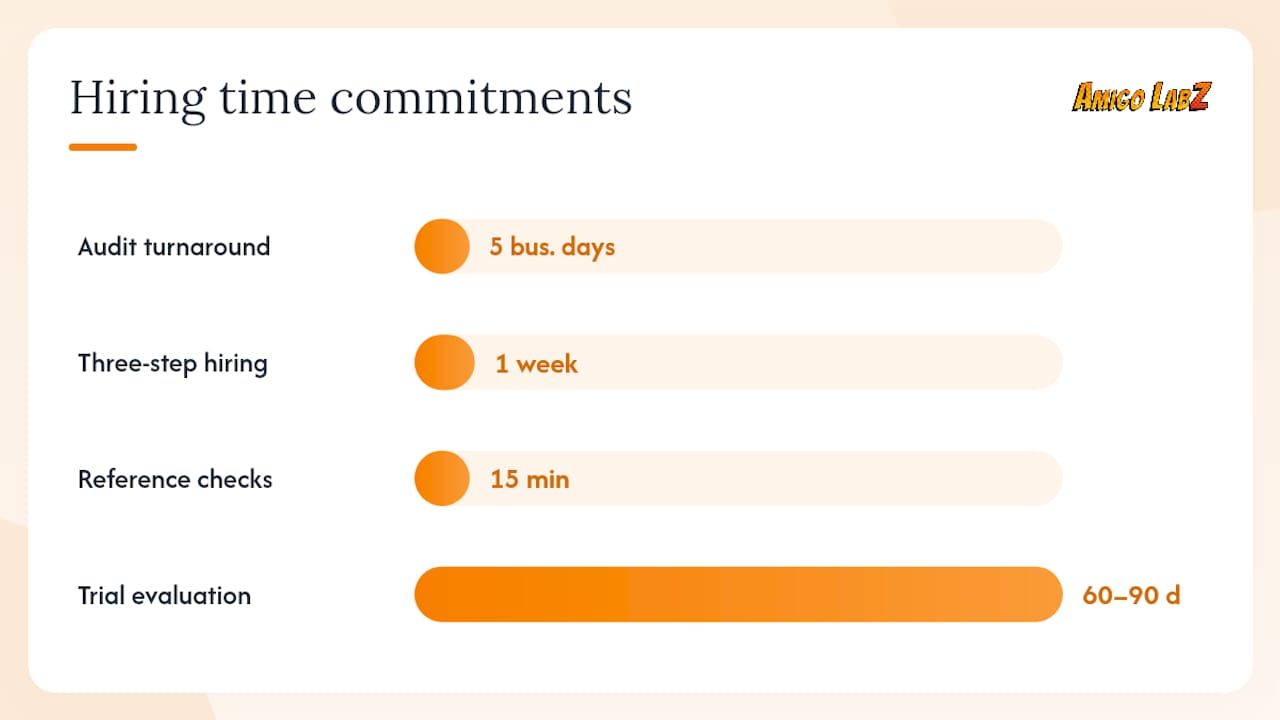
You don't need months to evaluate a dental SEO company. Three steps, done in a week, are enough.
- Request a written audit from each candidate. Give each agency access to your GBP and Google Search Console and ask for a written audit within five business days. The quality of that audit tells you more than any sales call. A strong audit identifies specific technical issues, citation gaps, and ranking opportunities with clear priorities. A weak one is a generic slide deck.
- Compare three concrete items per proposal. For each agency you're evaluating, compare: (a) the sample monthly report format, (b) the account ownership clause in the contract, and © one client reference in a comparable market. Score each on a simple 1–3 scale. The agency with the highest combined score across all three gets the call.
- Run reference calls with a script. Ask each reference: "What does your monthly report show you?" "Do you own all your accounts?" "What happened when you had a concern?" Three questions, five minutes each, and you'll know more than any sales pitch will tell you.
Before the first call, pull together your current analytics access, GBP login, a summary of your last 90 days of marketing spend and results, and your booking system's new-patient source data if it tracks it. Agencies that ask for this information upfront are the ones worth talking to.
Set a 60–90 day trial evaluation window in the contract. At day 60, measure GBP views, new-patient calls from organic, and ranking movement for your top five service terms. At day 90, add cost per acquired patient. If the trajectory is positive, extend. If it isn't, the short commitment protects you.
What I see in the field that most buyers miss
The most common mistake practice owners make isn't hiring the wrong agency. It's hiring without a baseline. If you don't know your current cost per new patient from each channel before the engagement starts, you have no way to judge whether the agency improved anything. Pull that number first, even if it's rough.
The second pattern I see repeatedly: practices that got burned by a previous vendor are so focused on avoiding another bad experience that they over-index on price. The instinct makes sense, but the result is usually another templated, low-effort engagement. The better filter is the audit quality and the reporting format, not the monthly fee.
There are situations where the honest answer is to say no to SEO entirely, at least for now. If a practice has a broken booking system, a website that loads in six seconds on mobile, or a GBP listing with 2.8 stars and 12 reviews, fixing those problems first will produce more new patients than any SEO campaign. A credible agency will tell you that. One that doesn't is selling you a campaign before you're ready for one.
Amigolabz can audit your practice and build a real growth plan
Amigolabz offers a structured discovery audit for dental practices that want a clear picture of where they stand before committing to a full engagement. The audit covers GBP health, technical site issues, citation gaps, current rankings, and a competitor gap analysis. You get a written roadmap with prioritized actions and a realistic timeline, not a sales deck.

After the audit, Amigolabz delivers a pricing estimate tied to the specific scope your practice needs, along with pilot options for practices that want to test before committing to a longer engagement. The agency's full SEO service offering covers everything from local citation cleanup to multi-location attribution setups.
The next step is straightforward: book a discovery call and request the audit. Bring your current analytics access and a summary of your last 90 days of marketing spend. The call takes 30 minutes and ends with a clear scope of what the audit will cover and when you'll have results.
Useful sources
- How to Hire Dental SEO Help Without Getting Burned — a buyer's guide focused on the questions to ask and the outcomes to demand; useful for drafting discovery call scripts and RFP questions.
- 10 Dental Marketing Red Flags Agencies Won't Address — covers reporting standards and the red flags most buyers miss; use it to evaluate sample reports from candidate agencies.
- How to Evaluate Your Dental Marketing Agency: A 10-Point Scorecard — a structured scorecard covering cost per patient, ownership, GBP management, and AI readiness; practical for rating agencies side by side on discovery calls.
- How to Choose a Dental Marketing Company (2026) — covers healthcare-specific expertise, attribution, short initial commitments, and realistic timeline expectations; useful for setting contract terms.
- How to Evaluate a Dental SEO Agency — pricing guidance and onboarding best practices; use it to benchmark proposals and identify templated low-value offers.
FAQ
How much does dental SEO cost per month in the U.S.?
Ongoing dental SEO typically runs $500–$3,000 per month depending on scope, market competition, and whether paid ads are included. Pricing below $500/month rarely funds the labor required for real results.
How long does dental SEO take to show results?
Measurable ranking movement usually appears within 3–6 months. Consistent new-patient growth from organic search typically develops over 6–12 months. Google Ads can generate patient inquiries within weeks.
What should a dental SEO monthly report include?
A credible report should show spend, fees, leads, attributed new patients, and cost per acquired patient by channel. Traffic and impressions alone are not sufficient reporting for a practice evaluating ROI.
What makes Amigolabz a strong choice for dental practices?
Amigolabz starts every engagement with a written audit, builds attribution tracking from day one, and guarantees full account ownership in writing. The agency's SEO services cover the complete local SEO scope U.S. dental practices need.
What is the biggest red flag when evaluating a dental SEO company?
A guarantee of a specific ranking position is the clearest red flag. No agency can guarantee a #1 ranking, and any that does is either misrepresenting how search works or planning to use tactics that carry penalty risk.
Recommended