Digital Advertising Examples: 12 Campaigns You Can Copy
Digital Advertising Examples: 12 Campaigns You Can Copy

Digital advertising examples worth studying span search, social, display, video and CTV, commerce, email, and influencer activations. The lesson repeats across every winning campaign: pair one attention-grabbing creative idea with one measurable action, then let the data tell you whether to scale it.
The best examples share a pattern. Spotify turns raw listening data into a shareable personal story. Old Spice takes a stale product category and makes it culturally unavoidable. Dollar Shave Club proves a $4,500 video can outperform a seven-figure TV buy. None of these required a Fortune 500 budget to conceive, and local businesses can adapt smart digital strategies as shown in examples for local businesses in Southern California. They required a sharp read on the audience and a channel that fit the message.
Here's what to study before you build your next campaign:
- Spotify Wrapped (owned/CRM + social): Personalized year-end data turns into free organic reach when users share their own results.
- Old Spice hero video (video/social): One absurd, quotable ad revived a dying brand category almost overnight.
- Dollar Shave Club (video/direct response): A cheap, funny founder video drove signups faster than traditional retail advertising.
- Lyft referral program (owned/growth): Peer-to-peer incentives turned existing riders into an acquisition channel.
- CeraVe "anti-advertising" (social/influencer): Deliberately awkward brand ownership content built more trust than polished spots.
The IAB projects U.S. ad spend will grow 9.5% year over year in 2026, with social, connected TV, and commerce media leading that growth. Agencies like Amigolabz see the same shift on the ground: small and mid-size clients are moving budget out of static display and into short-form video and shoppable formats because that's where measurable return actually shows up now.
Key Takeaways
The most effective digital advertising examples pair one sharp creative idea with one measurable channel, then scale only after a real test proves it works.
| Point | Details |
|---|---|
| Match format to objective | Use CTV or video for awareness, search or social for acquisition, email for retention. |
| Study proven mechanics | Referral programs, real-time cultural moments, and founder-led video all have documented playbooks to copy. |
| Track the right metrics | Watch CTR and CVR daily, and ROAS and brand lift over longer windows. |
| Budget real production time | Video and CTV campaigns need four to eight weeks of lead time before launch. |
| Prioritize first-party data for 2026 | Agentic AI and tightening targeting rules make owned customer data your most reliable asset. |
| Start with a focused test | Amigolabz runs new clients through a discovery, setup, and four to eight week test phase before recommending scale. |
What Makes Something a Digital Advertising Example Worth Studying
Digital advertising means any paid placement delivered through a digital channel, whether that's a search results page, a social feed, a streaming service, or a podcast pre-roll. Amazon Ads' guide to digital formats frames it simply: you're buying attention on a platform your audience already uses, and you're paying based on an action, not a fixed slot.
Three differences separate digital from a billboard or a magazine spread. First, targeting and measurement: you can aim a campaign at people who searched a specific term last week, and you know within hours whether it worked. Second, speed of iteration: a TV spot runs for its contracted flight whether it's working or not, but a Facebook ad can be paused, rewritten, and relaunched the same afternoon. Third, shoppability and attribution: a viewer can go from seeing a product to buying it in three taps, and you can trace that path back to the exact ad that started it.
| Factor | Digital advertising | Traditional advertising |
|---|---|---|
| Targeting precision | Behavioral, contextual, and demographic layers | Broad demographic or geographic only |
| Measurability | Click, conversion, and view-through tracking | Reach and frequency estimates |
| Time to market | Live in hours | Weeks of production and placement lead time |
| Attribution | Traceable to a specific ad and audience | Rarely traceable to a single exposure |
| Cost flexibility | Adjustable daily budgets and bids | Fixed contract, hard to change mid-flight |
None of that matters without the right metrics attached to it. Marketers running digital campaigns should track:
- Click-through rate (CTR): how many people who saw the ad actually clicked it.
- Conversion rate (CVR): the share of clicks that turned into a sale, lead, or signup.
- Return on ad spend (ROAS): revenue generated for every dollar spent.
- Viewability: whether the ad was actually visible on screen long enough to register.
- Brand lift: measured shifts in awareness or favorability, usually tracked through surveys tied to exposure.
Which Ad Format Fits Your Campaign Goal
Every major format solves a different problem, and picking the wrong one for your objective wastes budget no matter how good the creative is.
Paid search (SEM) captures people already looking for a solution. It's the closest thing to a guaranteed audience because intent already exists.
Display banners build broad visibility across websites your audience visits, generally at a lower cost per impression than most other formats.
Programmatic and native ads buy inventory automatically across a network of publishers, with native formats blending into the surrounding content so they read less like an interruption.
Online video (OLV) runs pre-roll, mid-roll, or as a standalone unit on platforms like YouTube. It's built for storytelling in fifteen to thirty seconds.
Connected TV (CTV) delivers video ads to streaming services on a television screen, combining TV-level production value with digital-level targeting and measurement.
Audio and podcast ads reach people during commutes and workouts, when their attention is genuinely undivided.
Social ads run across feeds and stories on platforms like Instagram, TikTok, and Facebook, and they're the format most suited to creative that looks native to the platform rather than obviously paid.
Commerce and shopping ads put a product directly in front of a shopper on a retail search or marketplace page, often at the exact moment of purchase intent.
Influencer and creator partnerships borrow trust that's already been built between a creator and their audience.
Email and CRM ads target people who already know your brand, making them the cheapest channel for retention and repeat purchase, as covered in Amigolabz's guide to email campaign ideas.
In-game, AR, and shoppable formats are newer, but they're growing fast because they let a viewer interact with a product without leaving the platform.
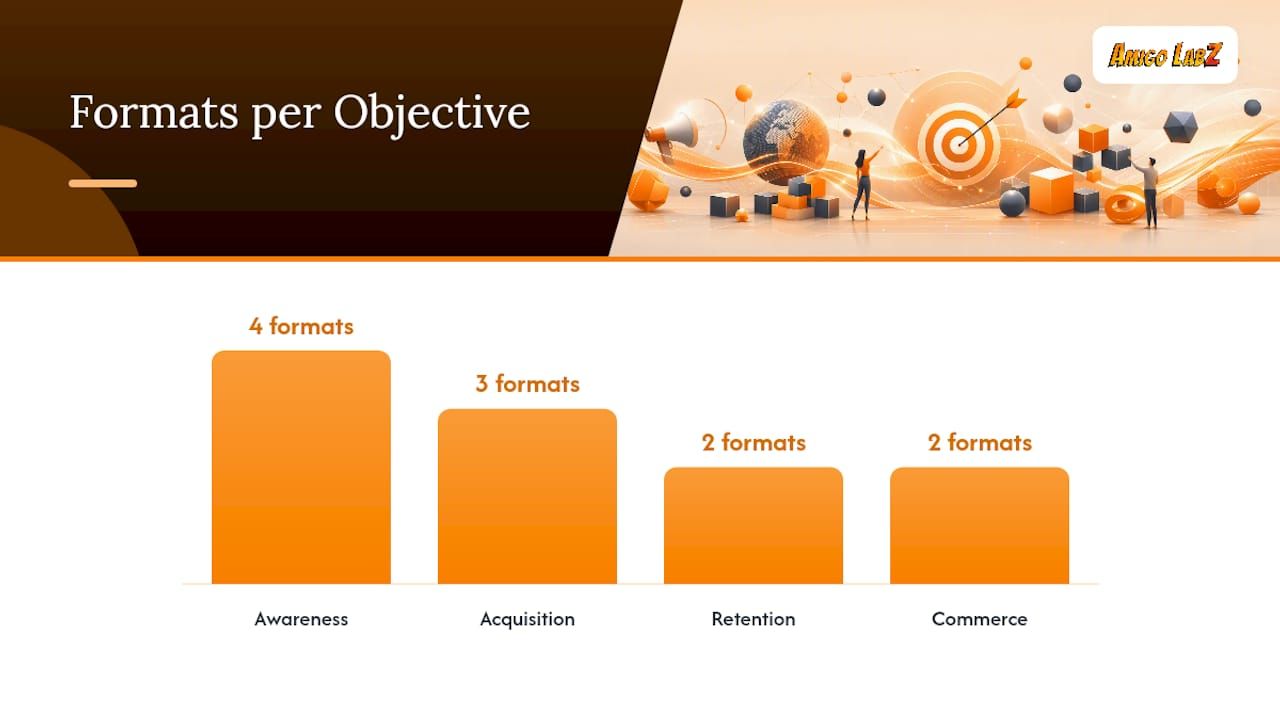
| Objective | Best-fit formats |
|---|---|
| Awareness | CTV, online video, display, audio |
| Acquisition | Paid search, social, programmatic |
| Retention | Email/CRM, retargeting display |
| Commerce | Shopping ads, commerce media, native |
Pro Tip: Pick one reach format and one direct-response format for every campaign. Run the reach format (CTV or online video) to build recognition, then let the direct-response format (search or social) capture the demand it creates. Running only one or the other usually leaves performance on the table.
Format choice also comes with production reality. Video and CTV need real production lead time, usually weeks, not days. Search and social can launch same-day with existing assets. Budget your creative timeline accordingly, because a rushed video ad usually underperforms a well-tested static one.
12 Real Digital Advertising Campaigns and What to Copy
1. Spotify Wrapped
Channel: Owned app + social sharing. Objective: Retention and organic reach. Tactic: Spotify turns a full year of listening data into a personalized, shareable summary delivered inside the app every December. Users post their results unprompted, turning a retention feature into a free acquisition engine.
What to copy: You don't need Spotify's data scale to use this idea. Any business sitting on customer data (purchase history, loyalty points, service anniversaries) can build a personalized year-end or milestone recap and let customers share it.
2. Old Spice — The Man Your Man Could Smell Like
Channel: Video, later amplified through social. Objective: Brand relevance with a category that had gone stale. Tactic: One absurd, fast-paced monologue direct to camera, aimed squarely at reframing a men's grooming brand as something women would actively choose for their partners.
What to copy: A confident, specific creative angle beats a broad, safe one. The ad worked because it picked a clear audience insight (women often buy men's grooming products) and committed fully to a tone nobody expected from the category.
3. Oreo — You Can Still Dunk in the Dark
Channel: Social (real-time). Objective: Cultural relevance and earned media. Tactic: During a live sporting event's stadium blackout, Oreo's social team posted a simple graphic within minutes, tying the brand to a moment everyone was watching in real time.
What to copy: Build a lightweight real-time response process before you need it. A pre-approved creative template and a decision-maker on standby during major cultural moments (as covered in reporting on viral entertainment moments) is what let Oreo move that fast.
4. Dollar Shave Club — Our Blades Are F***ing Great
Channel: Online video, direct response. Objective: Direct signups for a subscription product. Tactic: A founder-led, low-budget video with deadpan comedic delivery replaced the polished razor commercials the category was known for, and it drove an immediate spike in signups.
What to copy: Production value matters less than a clear, funny, specific pitch delivered by a real person. This is one of the most replicable examples in this list for a small business with a modest video budget.
5. Lyft — Referral Program
Channel: Owned growth mechanic. Objective: Acquisition through existing customers. Tactic: Lyft's published referral terms give both the referrer and the new rider a credit, turning every satisfied customer into a potential recruiter.
What to copy: A referral offer works best when the incentive is meaningful to both sides and the mechanic is dead simple to explain in one sentence.
6. Sephora — Omnichannel Experience
Channel: Commerce, app, in-store, social. Objective: Retention and cross-channel purchase. Tactic: Sephora connects loyalty data, in-store try-on tools, and app-based recommendations so a customer's online browsing history informs what happens when they walk into a store.
What to copy: Even a modest customer database can support a similar loop: use online behavior to personalize an in-store offer, or use in-store visits to trigger a targeted follow-up email.
7. Dove — Real Beauty and #FaceOf10
Channel: Influencer and social storytelling. Objective: Brand trust and long-term loyalty. Tactic: Dove built a decade-long campaign around real, unretouched women rather than traditional models, and extended it into creator partnerships that continued the same message.
What to copy: A consistent brand position, repeated across years and formats, builds more trust than a single clever ad. Pick one value your brand actually holds and let every campaign reinforce it.
8. Red Bull Stratos
Channel: Experiential content, video, live stream. Objective: Awareness and brand identity. Tactic: Red Bull sponsored a stratospheric skydive jump, live-streamed to millions, that had nothing to do with the product and everything to do with the brand's "gives you wings" identity.

What to copy: You don't need a space jump. The takeaway is smaller: content tied to a genuinely exciting event outperforms content that's obviously an ad, because people share the event, not the sponsorship.
9. CeraVe — Anti-Advertising Campaign
Channel: Social, influencer. Objective: Trust and authenticity in a skeptical category. Tactic: CeraVe leaned into an intentionally awkward, "we made a weird ad" tone across influencer content, acknowledging that people are tired of polished skincare marketing.
What to copy: Self-aware, slightly imperfect creative often outperforms a highly produced spot on social feeds, where audiences are primed to distrust anything that looks too much like an ad.
10. UNIQLO — Uncover
Channel: Retail experience, video, social. Objective: In-store engagement and product discovery. Tactic: UNIQLO built interactive, discovery-driven creative experiences that connect digital content directly to physical retail moments.
What to copy: Even a single-location small business can borrow the core idea: use a short video or interactive post to preview an in-store experience rather than just listing products.
11. Commerce Media Placement Example
Channel: Retail media network, shopping ads. Objective: Bottom-funnel commerce conversion. Tactic: A packaged goods brand runs sponsored placements directly on a retailer's search and category pages, appearing at the exact moment a shopper is comparing products.
What to copy: If you sell through a marketplace or major retailer, sponsored placement inside that platform usually converts better than driving cold traffic to your own site.
12. Programmatic Native Content Example
Channel: Programmatic, native. Objective: Awareness with editorial-style creative. Tactic: A financial services brand runs native-style articles across a publisher network, automatically bought and placed through a programmatic exchange, blending into the surrounding editorial content.
What to copy: Native ads work when the content genuinely matches the reading experience around it. A native ad that looks like a banner defeats the format's purpose.
Adobe's roundup of successful digital marketing campaign examples covers several of these in more depth if you want additional case detail before adapting one for your own brand.
How Digital Ads Actually Get Targeted, Bought, and Measured
Targeting comes in four main flavors: search intent (someone typed a specific query), behavioral (someone's past browsing or purchase activity), contextual (the content surrounding the ad), and cohort-based first-party segments (your own customer list, uploaded to a platform).
Pricing follows a handful of standard models. CPC (cost per click) charges only when someone clicks. CPM (cost per thousand impressions) charges for visibility regardless of clicks. CPA (cost per acquisition) ties payment to a completed action like a sale. vCPM charges only for viewable impressions. Programmatic private marketplaces (PMPs) let advertisers buy premium inventory directly from specific publishers rather than the open exchange.
Creative needs to earn attention in the first two seconds, particularly on video and social, where a "thumb-stopping" opening frame determines whether anyone watches the rest. Headlines should be short, and every unit needs one clear call to action.
Measurement splits into immediate signals and longer-term signals. Track CTR and CVR daily. Track ROAS weekly. Track viewability and brand lift monthly, since those numbers move slower and need more data to read reliably.
A quick glossary worth knowing: DSP (demand-side platform, where advertisers buy inventory), SSP (supply-side platform, where publishers sell it), DMP or clean room (data management systems that handle audience matching without exposing raw customer data), ROAS , and viewability . Understanding these terms helps when evaluating any agency's reporting, including topics covered in Amigolabz's piece on audience segmentation.
How to Plan a Campaign From Objective to Launch
Start with the objective, not the channel. Decide whether you need awareness, acquisition, retention, or a commerce lift, then work backward to the format.
- Define the objective in one sentence tied to a number (e.g., "generate 50 qualified leads in 60 days").
- Pick your primary channel based on the objective table above, plus one secondary channel to retarget.
- Set KPIs before launch, not after, so you know what "working" looks like.
- Build the creative plan , including how many variations you need for testing.
- Design your measurement setup , including tracking pixels and conversion events, before the first dollar spends.
| Campaign type | Typical timeline | Ballpark budget range |
|---|---|---|
| Search (local SMB) | 1 to 2 weeks to launch | Several hundred to a few thousand dollars per month |
| Social ads | 1 to 3 weeks including creative | Similar range, scales with audience size |
| Video/CTV | 4 to 8 weeks for production | Higher due to production costs |
| Influencer partnership | 3 to 6 weeks for outreach and content | Varies widely by creator size |
Smartly's 2026 trends report found that 41% of marketers say it takes three to four weeks to move from asset creation to full campaign execution. Budget that lead time into your launch date instead of assuming a same-week turnaround.
Pre-launch checklist:
- Confirm tracking pixels fire correctly on every landing page.
- QA every creative variation across device sizes.
- Set daily budget pacing rules so spend doesn't front-load in week one.
- Confirm your landing page loads fast and matches the ad's promise.
What's Changing in Digital Advertising for 2026
The IAB's 2026 Outlook projects U.S. ad spend is actively moving toward channels that can prove a direct path to a sale.
Agentic AI is the bigger structural shift. That means your creative and data setup need to be "agentic-ready," meaning clean first-party data and clear brand guardrails an automated system can actually use.
Three moves make sense right now:
- Prioritize first-party data collection, since third-party targeting keeps getting harder.
- Build creative that reads clearly to AI systems summarizing or recommending products, not just human eyes.
- Test cohort-based targeting using your own customer segments rather than relying solely on platform-level audiences.
Pro Tip: If you adopt any automated bidding or agentic buying tool, set a hard governance rule: review spend and creative performance weekly, not monthly. Automated systems can scale a mistake just as fast as a win.
How Amigolabz Adapts These Examples for Small Business Clients
None of these examples require a national ad budget to work in principle. A referral mechanic like Lyft's, a founder-led video like Dollar Shave Club's, or a segmented email campaign inspired by Sephora's approach can all scale down to a local business budget. The work is picking the one that fits your actual customer behavior and running it as a real test, not a guess.
Amigolabz typically approaches a new client the same way regardless of industry:
- Discovery: identify the objective, current channels, and available first-party data.
- Setup: build tracking, landing pages, and creative for one or two priority formats.
- Test: run a four to eight week test with a defined budget and KPI targets.
- Scale: reallocate budget toward whatever format proved out during the test.
Bring These Campaign Ideas to Your Own Business
Reading twelve great examples is one thing. Turning one into a working campaign for a plumbing company, a moving business, or a wellness studio is a different job, and it's the job Amigolabz does every week for clients across New Jersey and Nevada.

Amigolabz's core services map directly to the formats covered above: Facebook Ads management for social campaigns like the CeraVe and Dove-style influencer approaches, Google Ads for capturing search intent the way section three describes, and social media management for building the kind of consistent brand presence Dove sustained for a decade. A starter engagement usually begins with an audit of what's currently running, a 30/60/90-day roadmap tied to real KPIs, and a modest test budget before anything scales. If one of these examples sparked an idea for your business, book a call and Amigolabz will help you figure out which format fits your budget and your customers first.
Sources
These are U.S.-focused figures; readers outside the U.S. should treat the growth percentages as directional rather than exact for their own market.
FAQ
What Are the Best Digital Advertising Examples to Study First?
Start with Old Spice, Dollar Shave Club, and Lyft's referral program. All three used a modest budget and a single clear idea, which makes them easier to adapt than large-scale brand campaigns like Red Bull Stratos.
What Types of Digital Ads Should a Small Business Try First?
Paid search and social ads usually deliver the fastest measurable results for a local business, since both can launch within one to three weeks and target people already showing intent.
How Much Does a Digital Ad Campaign Typically Cost?
Costs vary widely by channel and market, but a local search or social campaign generally starts in the range of several hundred to a few thousand dollars per month, while video and CTV production costs run higher.
What Metrics Matter Most in a Digital Advertising Campaign?
Click-through rate and conversion rate show immediate performance, while ROAS and brand lift reveal whether the campaign is actually profitable and building long-term brand value.
Can a Small Business Really Copy Campaigns Like Spotify Wrapped or Dove's Real Beauty?
Yes, at a smaller scale. A personalized data recap or a consistent brand message repeated over time works the same way regardless of budget. Agencies like Amigolabz build these ideas into scaled-down, testable campaigns for local clients.
Recommended