Unlock Social Proofing to Boost Customer Trust by 270%
Unlock Social Proofing to Boost Customer Trust by 270%

Most business owners in transportation and hospitality pour thousands into polished ads, sleek brochures, and professional photography. Yet they overlook the single most powerful trust builder: what real customers say about their experience. Nearly 9 out of 10 people trust peer recommendations over any advertisement you could create. Social proofing transforms how travelers and guests make booking decisions, turning hesitant browsers into confident customers. This guide shows you exactly how to implement authentic social proof strategies that drive real results.
Table of Contents
Key Takeaways
| Point | Details |
|---|---|
| Peer trust wins | Most travelers trust peer reviews and user content more than traditional advertising. |
| Authenticity is critical | Specific and realistic reviews, not just high quantities, are what inspire booking decisions. |
| Strategic placement matters | Displaying social proof on key pages like booking or itinerary pages ignites trust and conversions. |
| Mix review types | A combination of UGC, testimonials, and real-time activity creates the strongest impression. |
Defining social proofing: Meaning and importance
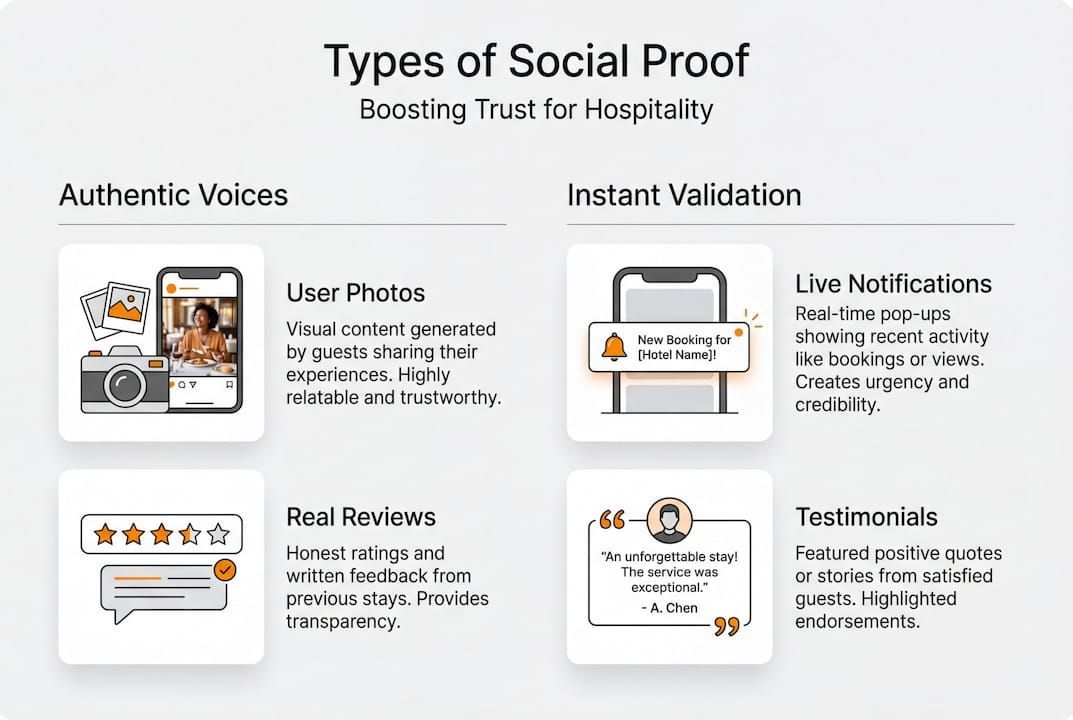
Social proofing leverages others' experiences to influence new customers. When potential guests see real people sharing positive experiences with your shuttle service or hotel, they feel safer making that same choice. This psychological phenomenon taps into three core drivers: fear of missing out on great experiences, trust in peer opinions over corporate messaging, and the confidence boost that comes from seeing others validate a decision.
In transportation and hospitality, social proofing matters more than in most industries. You're asking customers to trust you with high-cost, high-trust transactions. A family booking a charter bus for their reunion or a couple reserving a boutique hotel for their anniversary needs reassurance beyond your marketing claims. When a bus company displays verified testimonials prominently on their booking page, they often see immediate jumps in conversion rates.
The numbers back this up. Reviews can raise conversion rates by up to 270% when displayed strategically. That's not a marginal improvement. That's transformative growth from simply showing what your existing customers already think.
Key forms of social proof include:
- Verified customer reviews with star ratings
- Real-time booking notifications showing recent reservations
- User-generated content like guest photos and videos
- Detailed case studies and testimonial stories
- Trust badges and industry certifications
- Social media follower counts and engagement metrics
"The most effective social proof doesn't just tell prospects you're good. It shows them through the authentic voices of people just like them who've already made the journey."
Your website solutions should integrate these elements naturally into the user experience. Strategic website design places social proof exactly where decision-making happens, not buried on a separate testimonials page nobody visits.
Key types of social proofing for transport and hospitality
Now you know what social proofing is. Next up: Which kinds work best for travelers and guests, and why does authenticity often matter more than sheer numbers?
User-generated content represents the gold standard. When guests post photos from your hotel rooftop or riders share videos of your comfortable coach interiors, they create authentic proof that resonates deeply. Bus companies use UGC, reviews, and case studies as their primary trust-building tools because this content feels real, not manufactured.
Verified customer reviews displayed at conversion points catch prospects at their moment of decision. A five-star review about punctual airport transfers, positioned right above your booking button, addresses the exact concern holding someone back from clicking.
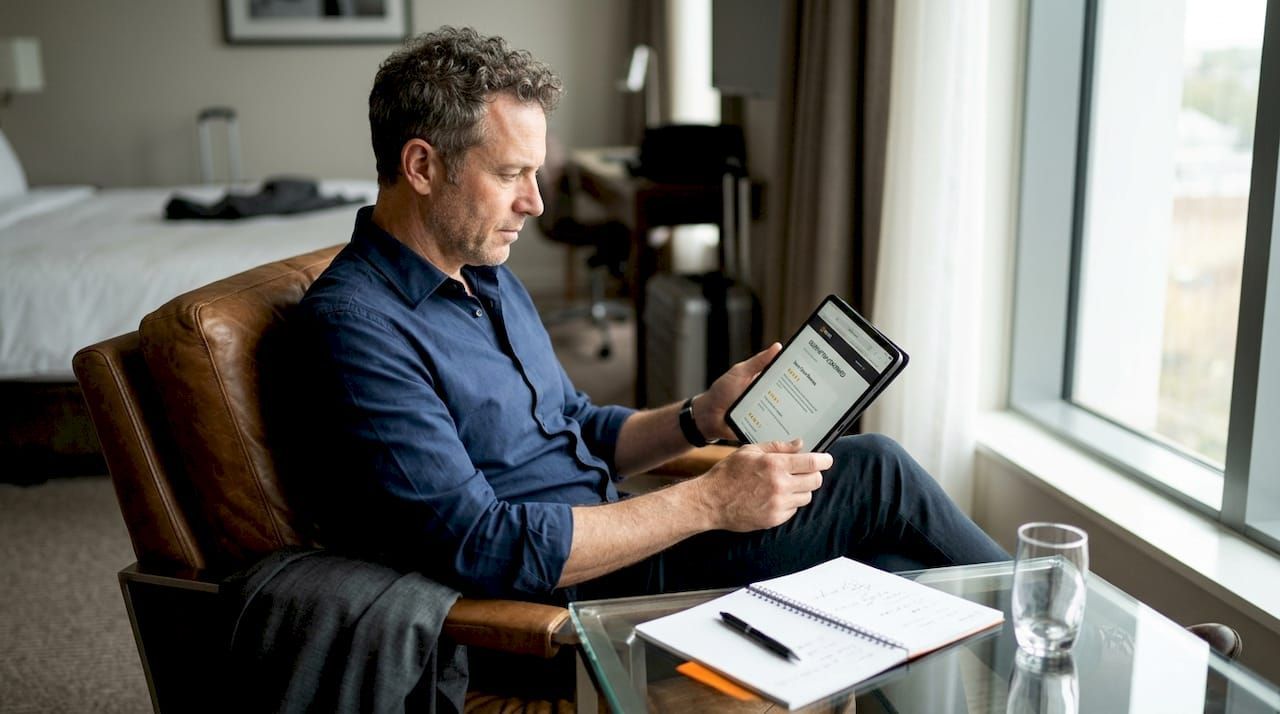
Case studies and testimonials work differently. They tell complete stories. A detailed account of how your shuttle service handled a complex corporate event, complete with challenges overcome and results delivered, builds credibility through narrative depth.
Real-time notifications create urgency and validation simultaneously. "Sarah from Denver just booked the Wine Country Tour" tells prospects that others are actively choosing you right now.
| Social Proof Type | Primary Strength | Ideal Channels | Trust Impact |
|---|---|---|---|
| User-Generated Content | Authenticity and visual appeal | Instagram, Facebook, website galleries | Very High |
| Verified Reviews | Specific feedback and ratings | Google, Yelp, booking pages | High |
| Case Studies | Detailed problem-solving stories | Website, email campaigns | High |
| Real-Time Notifications | Urgency and social validation | Booking pages, landing pages | Medium-High |
| Trust Badges | Credibility through association | Checkout pages, footer | Medium |
Pro Tip: User-generated content with location tags and date stamps builds extra credibility. When someone posts a photo from your beachfront property tagged with last week's date, it proves your business is actively delivering great experiences right now, not relying on outdated testimonials from years ago.
Your social media management strategy should actively encourage and curate UGC. Look at successful customer review examples to see how other industries display social proof effectively.
Authenticity vs. quantity: What builds the most trust?
Here's something that surprises many business owners: too-perfect reviews actually create skepticism. When every single review glows with five stars and generic praise, savvy consumers smell something fishy. They know real experiences include minor hiccups and honest feedback.
A realistic mix of positive and negative reviews builds more trust than a perfect score. Customers prefer businesses with 4.6 to 4.8-star ratings over those with perfect 5.0 scores on major platforms. Why? Because perfection feels manufactured while slight imperfection feels human and honest.
Specific stories outperform vague praise every time. Compare these two reviews:
"Great service, highly recommend!"
vs.
"Our driver Miguel arrived 10 minutes early for our 6 AM airport run, helped with our luggage, and knew a faster route that saved us 15 minutes. Made our stressful morning smooth."
The second review includes names, times, specific actions, and concrete outcomes. It feels real because it is real. Generic praise could apply to anyone. Specific details prove genuine experience.
| Review Characteristic | Trust Level | Conversion Impact |
|---|---|---|
| Perfect 5.0 stars, generic praise | Low | Minimal |
| 4.6-4.8 stars, specific details | High | Strong |
| Mix of positive/negative with responses | Very High | Maximum |
| Recent dates, verified purchases | High | Strong |
"Authenticity beats volume. One detailed, specific review from a real customer who describes their actual experience will influence more bookings than ten generic 'Great service!' comments."
Three steps to audit your reviews for authenticity:
-
Check the specificity ratio. Count how many reviews include specific details (names, dates, situations) versus generic praise. Aim for at least 60% specific.
-
Review your response rate. Responding to reviews, especially negative ones, shows you're real and engaged. Businesses that respond to criticism professionally often convert more browsers than those with perfect scores and no responses.
-
Verify recency and distribution. Reviews clustered in one time period look suspicious. Steady streams of feedback over months prove ongoing quality.
Your SEO strategies should include review generation as a core component. Improving online presence means actively managing your reputation across platforms.
How to implement effective social proofing strategies
Understanding the 'how' of social proofing is great, but what does successful execution look like for a business like yours? Let's look at proven tips and strategies.
Step-by-step implementation process:
-
Audit your current social proof. Gather all existing reviews, testimonials, photos, and case studies. Identify gaps in coverage. Do you have proof for every service you offer? Are reviews recent?
-
Source new social proof systematically. Create a post-service email sequence asking satisfied customers for reviews. Make it easy with direct links to your Google Business Profile or preferred review platform. Incentivize user-generated content through contests or features on your social channels.
-
Place social proof strategically. Display verified reviews, UGC, and real-time notifications on high-intent pages where decisions happen. Your booking page needs different proof than your about page.
-
Test and optimize placement. Use A/B testing to find which types of social proof convert best in different positions. Some businesses find video testimonials work better above the fold while others see stronger results from review widgets near pricing.
Best practices by page type:
- Homepage: Feature your strongest overall rating, recent booking notifications, and 2-3 standout testimonials that address common concerns.
- Booking pages: Display service-specific reviews, trust badges, and real-time activity. Show proof relevant to what they're about to purchase.
- Itinerary pages: Include user-generated photos from that specific route or destination, plus reviews mentioning those locations.
- Landing pages: Match social proof to the ad or campaign that brought visitors there. If your ad promised luxury, show reviews praising your premium amenities.
Pro Tip: Encourage guests and riders to tag your brand in social media posts by creating a unique, memorable hashtag and displaying it prominently in vehicles and properties. Offer small incentives like entry into monthly drawings for those who share their experiences.
Common pitfalls to avoid:
- Buying fake reviews or testimonials (customers spot these instantly and it destroys trust)
- Over-editing customer feedback to remove all criticism (authenticity requires some imperfection)
- Ignoring negative reviews instead of responding professionally
- Using outdated social proof from years ago without fresh content
- Displaying social proof that doesn't match your current service quality
- Overwhelming pages with too many competing proof elements
Your Facebook advertising and Google Ads strategies should incorporate social proof in ad copy and landing pages. Effective website design tips always include strategic social proof placement as a conversion optimization fundamental.
Amplify your digital marketing with expert support
It's time to put proven social proofing and digital marketing to work for you. Building trust through authentic customer voices requires more than just collecting reviews. It demands strategic placement, ongoing optimization, and integration with your broader marketing ecosystem.
At Amigo Labz, we specialize in helping transportation and hospitality businesses transform social proof into measurable growth. Our team understands the unique challenges you face, from seasonal booking fluctuations to the high-trust nature of your services. We've helped bus companies, hotels, and tour operators across New Jersey and Nevada implement social proofing strategies that drive real results.
Whether you need Google Ads solutions that incorporate customer testimonials, social media experts who can amplify your user-generated content, or comprehensive website redesigns that showcase your social proof effectively, the Amigo Labz team brings creative marketing strategies and genuine relationship-building to every partnership. Ready to boost trust and bookings? Let's connect the dots with your next steps.
Frequently asked questions
What is social proofing in hospitality and transportation?
Social proofing means using guest reviews, testimonials, and real-time user activity to influence potential customers' booking decisions. It transforms peer experiences into trust signals that drive conversions.
Why is authenticity important in social proofing?
Authentic mixed reviews build more trust than perfect scores because customers recognize real experiences include minor imperfections. Specific details prove genuine customer interactions rather than manufactured praise.
How much can reviews increase online bookings?
Displaying reviews can boost conversions by up to 270% when placed strategically on high-intent pages. This dramatic increase comes from reducing purchase anxiety and building confidence through peer validation.
Where should I display social proof for best results?
Social proof works best on conversion-focused pages like bookings and itineraries where customers make purchase decisions. Place relevant reviews and user content exactly where hesitation occurs in your booking funnel.
How do I encourage customers to leave reviews?
Send post-service emails with direct review links, make the process simple with one-click options, and respond to all reviews to show you value feedback. Consider gentle incentives like monthly drawings for reviewers, but never pay directly for positive reviews.
Recommended