Social Media Strategist: A 2026 Guide for Business Owners
Social Media Strategist: A 2026 Guide for Business Owners

TL;DR:
- A social media strategist plans and executes social campaigns to drive measurable business results. They combine technical skills, strategic thinking, and cross-team collaboration to align content with business goals. Proper evaluation, planning, and leadership buy-in ensure social media efforts translate into revenue and growth.
A social media strategist is a professional who designs and executes a company's social media presence to drive measurable business outcomes, including brand awareness, lead generation, and customer engagement. This role goes far beyond posting content. It blends content planning, performance analysis, SEO integration, and cross-channel coordination into a single function that directly supports business growth. Job descriptions for this role list 3–6 years of experience as essential in 65% of cases. That standard reflects how much technical and strategic knowledge the position actually demands. Professionals entering this field typically come from marketing, digital media, or public relations backgrounds, and many pursue credentials like the National Institute for Social Media's Social Media Strategist certification to validate their skills.
What skills must a social media strategist have to succeed?
A skilled social media strategist combines technical ability, analytical thinking, and clear communication. Content creation alone does not define the role. The most effective professionals in this position understand how to read data, build campaigns around business goals, and present results to leadership in terms that connect to revenue.

Technical skills
The technical foundation of this role covers three areas:
- Content tools: Proficiency with scheduling platforms, graphic design tools like Canva, and video editing software for short-form content
- SEO basics: Understanding keyword research, meta descriptions, and how social signals affect search visibility to improve brand discoverability
- Analytics platforms: Reading native platform dashboards (Meta Insights, LinkedIn Analytics) and third-party reporting tools to track performance
Strategic and interpersonal skills
Beyond tools, the role requires campaign planning, buyer persona development, and KPI setting from the start of every project. Core responsibilities include brand positioning, content calendar management, performance analysis, and coordination with SEO teams. A strategist who cannot communicate those results to a CFO or CEO will struggle to secure budget and resources.
Cross-team collaboration is non-negotiable. Social media strategy touches sales, customer service, product, and PR. A strategist who works in isolation produces content that misses the larger business picture.
Pro Tip: Avoid treating social media as a standalone function. Connect every campaign goal directly to a business objective, whether that is lead volume, customer retention, or revenue growth.
Certifications like the National Institute for Social Media credential cover strategic development, regulatory compliance, digital marketing, and community engagement. They signal to employers and clients that a professional understands the full scope of the role.
How does a social media strategist plan and measure campaigns?
Effective campaign management follows a repeatable cycle: plan, publish, measure, and adjust. Each phase depends on the one before it.
- Define the campaign goal. Every campaign starts with a specific, measurable objective tied to a business outcome, such as generating 200 leads in 30 days or growing email subscribers by 15%.
- Build the editorial calendar. Managing editorial calendars and coordinating content across platforms keeps messaging consistent and prevents last-minute publishing decisions that hurt quality.
- Combine organic and paid efforts. Organic content builds trust and community. Paid social amplifies reach and targets specific audience segments. Running both together produces better results than either approach alone.
- Track the right KPIs. Engagement rate, follower growth, reach, and lead conversion are the metrics that matter most. Tracking these consistently informs every strategy adjustment.
- Run optimization cycles. Review performance weekly or biweekly. Identify what content format, posting time, or message angle produced the best results, then shift budget and effort toward those patterns.
Measurement framework
| KPI | What it measures | Why it matters |
|---|---|---|
| Engagement rate | Likes, comments, shares per post | Shows how well content connects with the audience |
| Reach | Unique accounts that saw content | Indicates brand visibility growth |
| Lead conversion | Clicks that become form fills or calls | Ties social directly to revenue pipeline |
| Follower growth | Net new followers over time | Reflects brand authority building |
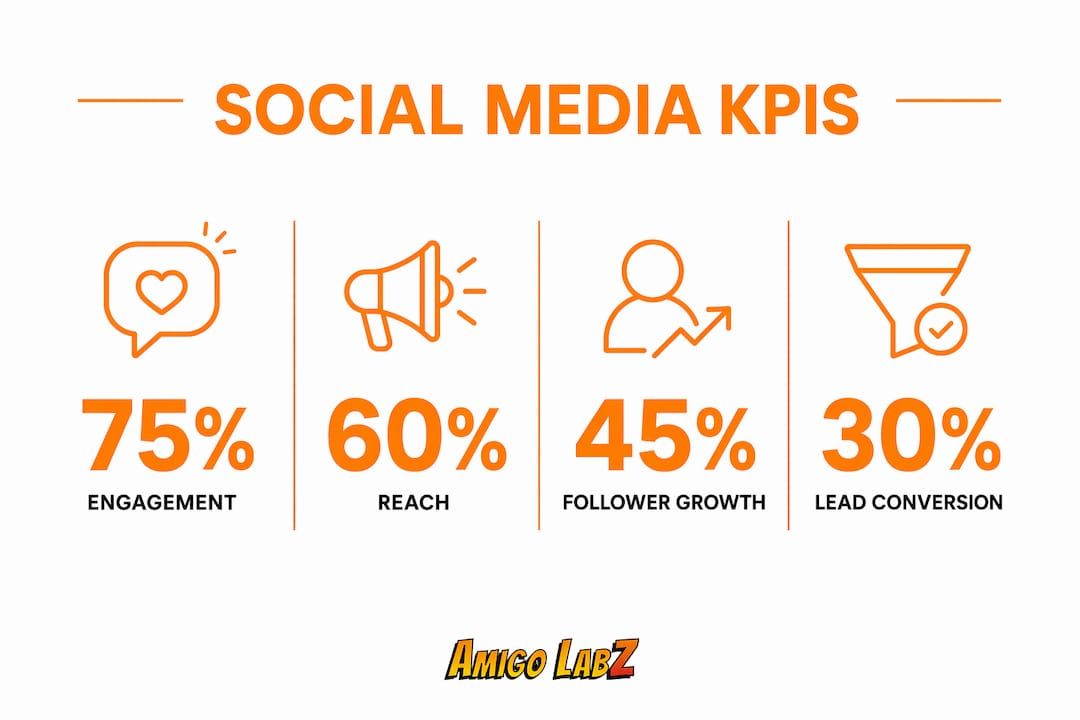
Pro Tip: Custom AI-driven content workflows can scale output while maintaining brand voice. Integrated organic, paid, and AI tools improve workflow efficiency without sacrificing the human feel that builds audience trust.
What are the best practices for aligning social media with business goals?
The biggest gap in most social media programs is the disconnect between what gets posted and what the business actually needs. A content strategy expert closes that gap by translating social metrics into business language.
Presenting social strategy in business terms is the single most effective way to secure leadership buy-in and budget. A slide showing 10,000 impressions means little to a CEO. A slide showing that social campaigns generated 85 qualified leads last quarter at a lower cost per lead than paid search means everything.
Brand voice consistency across every channel is equally critical. A business that sounds professional on LinkedIn but casual and inconsistent on Instagram confuses potential customers. The strategist's job is to define the voice, document it, and enforce it across every piece of content.
SEO and social media reinforce each other. Incorporating SEO into social content improves brand discoverability on both search engines and social platforms. Using keyword-informed captions, hashtags, and profile copy increases the chances that the right audience finds the brand organically.
Content-focused vs. outcome-focused approaches
| Approach | Primary focus | Success metric |
|---|---|---|
| Content-focused | Post frequency, aesthetics, follower count | Vanity metrics: likes, impressions |
| Outcome-focused | Lead generation, revenue, retention | Business KPIs: leads, conversions, ROI |
Performance-driven KPIs like engagement, reach, and lead generation are prioritized over aesthetic metrics by the most effective strategists. That shift in mindset separates professionals who grow businesses from those who simply maintain a feed.
How can businesses hire or work with a social media strategist effectively?
Hiring the right person or agency for this role requires more than reviewing a portfolio. You need to assess strategic thinking, measurement expertise, and cultural fit with your team.
When evaluating candidates or agencies, look for:
- A clear process for setting KPIs before any content is created
- Demonstrated experience connecting social results to business outcomes, not just content volume
- Familiarity with both organic content and paid social advertising to run integrated campaigns
- References or case studies showing measurable growth, such as lead increases or cost-per-acquisition improvements
- Knowledge of SEO fundamentals and how they apply to social content and profile optimization
Questions that reveal strategic thinking:
Ask candidates how they would handle a campaign that is not meeting its lead generation target. A strong answer involves analyzing the data, testing new creative or audience segments, and adjusting the paid budget. A weak answer focuses on posting more content.
Onboarding sets the tone for the entire working relationship. Give your strategist access to sales data, customer personas, and historical campaign performance from day one. Without that context, even the most skilled professional is working blind.
For ongoing evaluation, check these regularly:
- Are monthly reports tied to business KPIs, not just platform metrics?
- Is the strategist coordinating with your sales, SEO, and customer service teams?
- Are campaign budgets being adjusted based on performance data?
- Does the content marketing approach reflect your current business priorities?
A social media strategist who works well with your team and understands your business goals will consistently outperform one who simply produces polished content in isolation.
Key Takeaways
A social media strategist drives measurable business growth by integrating content planning, SEO, paid social, and performance analysis into a single, goal-driven function.
| Point | Details |
|---|---|
| Role definition | A social media strategist connects content execution to business outcomes like leads and revenue. |
| Core skills | Technical tools, SEO knowledge, analytics, and cross-team communication are all required. |
| Campaign management | Editorial calendars, combined organic and paid efforts, and KPI tracking form the execution cycle. |
| Business alignment | Present social results in business terms to secure leadership buy-in and budget. |
| Hiring criteria | Evaluate candidates on strategic thinking and measurement expertise, not just content quality. |
Why most social media programs underperform (and how to fix it)
After working with business owners across New Jersey and Nevada, I keep seeing the same pattern. Companies invest in social media, hire someone to manage it, and then measure success by follower counts and post frequency. Six months later, they wonder why the investment is not producing leads or revenue.
The problem is not the content. The problem is the absence of a real strategy. Posting consistently is a tactic. Knowing which audience segment to target, which platform drives the most qualified traffic, and how to connect a Facebook campaign to a sales pipeline is strategy. Those are two very different things.
The shift that actually moves the needle is treating social media as a digital marketing function with the same accountability as paid search or email. That means setting revenue-tied KPIs before any content is created, reviewing performance data weekly, and adjusting spend based on what the numbers show.
Leadership buy-in is the hardest part. Most executives have been burned by social media promises that never translated into pipeline. The way to overcome that skepticism is to show up with data in their language. Not reach. Not impressions. Leads, cost per acquisition, and revenue influenced. When you speak that language, the budget conversation changes entirely.
The role of the online brand strategist is also evolving fast. AI-assisted content workflows, short-form video dominance, and tighter integration between organic and paid channels mean the skill set required in 2026 looks different from what it did three years ago. The professionals who stay ahead are the ones who treat learning as part of the job, not an afterthought.
— John
How Amigolabz can support your social media strategy
Building a social media program that actually drives business results takes more than good content. It takes a team that understands strategy, data, and how all the pieces fit together.

Amigolabz works with business owners across the country from locations in New Jersey and Nevada to build social media management programs that connect directly to business goals. Whether you need help with content planning, audience targeting, or running Facebook Ads campaigns that generate qualified leads, Amigolabz brings the strategic depth and creative thinking your brand needs. The team also integrates SEO into every social effort so your brand gains visibility across both search and social channels. Book a call to talk through where your current strategy stands and what a focused plan could do for your growth.
FAQ
What does a social media strategist do?
A social media strategist designs and manages a company's social media presence to achieve specific business goals like lead generation, brand awareness, and customer engagement. The role covers content planning, campaign execution, performance analysis, and SEO integration.
How many years of experience does a social media strategist need?
65% of job descriptions list 3–6 years of experience as essential for this role. Most professionals come from marketing, digital media, or public relations backgrounds.
What KPIs should a social media strategist track?
The most important KPIs are engagement rate, reach, follower growth, and lead conversion rate. These metrics connect social performance directly to business outcomes.
How is a social media strategist different from a social media manager?
A social media manager focuses on day-to-day content creation and community management. A social media strategist sets the overall direction, defines KPIs, and aligns social efforts with broader business and marketing objectives.
What certifications help a social media strategist stand out?
The National Institute for Social Media's Social Media Strategist certification is one of the most recognized credentials in the field. It covers strategic development, digital marketing, regulatory compliance, and community engagement.
Recommended