Types of customer engagement: The small business owner's guide
Types of customer engagement: The small business owner's guide
TL;DR:
- Customer engagement involves ongoing, two-way interactions that foster long-term relationships beyond initial sales. Small businesses should focus on hybrid models combining automation and human touch, tailored to their customer base and resources. Prioritizing personalized, responsive communication, along with owned channels and strategic digital marketing, is key to building loyalty and long-term success.
Customer engagement is not about sending newsletters and hoping for the best. It is about ongoing, two-way interactions that keep your clients connected to your business long after the first sale. As a small business owner in New Jersey or Nevada, picking the wrong types of customer engagement means wasted budget and missed relationships. The right framework, though, changes everything. This guide breaks down the major engagement models and interaction types so you can make a confident decision that fits your size, your customers, and your goals.
Table of Contents
- How to evaluate customer engagement types for your small business
- Top types of customer engagement models and how they work
- Practical customer interaction types small businesses should prioritize
- Why seamless and human-centered engagement wins: lessons from 2026 customer expectations
- Examples of effective customer engagement strategies through the lifecycle
- Comparing customer engagement types: which fit your small business best?
- Why prioritizing personalized, two-way engagement is the winning strategy for SMBs
- Enhance your customer engagement with expert digital marketing services
- Frequently asked questions
Key Takeaways
| Point | Details |
|---|---|
| Engagement is ongoing interaction | Customer engagement means continuous two-way communication, not just single campaigns. |
| Match engagement to customer needs | Choose engagement types based on your customer base, resources, and desired relationship depth. |
| Combine automation with humans | Use automated tools for speed but ensure human support is ready for complex issues. |
| Use multiple channels | Omnichannel approaches with personalized, proactive outreach improve connection and loyalty. |
| Treat engagement as iterative | Collect feedback and optimize continually to keep customers engaged long-term. |
How to evaluate customer engagement types for your small business
Before choosing any engagement tactic, you need a clear set of criteria. Otherwise, you end up copying what a Fortune 500 company does and wondering why it is not working for your 12-person operation in Cherry Hill or Henderson.
Here are the core criteria worth measuring every engagement type against:
- Omnichannel connectivity: Can you maintain a consistent experience across email, social media, phone, and in-person? Omnichannel and personalization are foundational requirements for any engagement strategy that actually holds together.
- Personalization by segment: Not every customer wants the same message. Using audience segmentation strategies lets you tailor communication by purchase history, location, or behavior.
- Proactive outreach: Great engagement does not wait for a complaint. It anticipates needs and reaches out first, whether that is a check-in email after a purchase or a seasonal offer before a customer goes quiet.
- Feedback loops: If you are not collecting ongoing feedback, you are flying blind. Surveys, reviews, and direct conversations give you the data to improve.
- Loyalty programs: Incentives keep customers coming back. Points systems, VIP tiers, and exclusive offers are proven engagement drivers.
- Automation vs. human balance: Automation saves time. But over-automating your engagement strips out the human warmth that makes customers loyal. The best strategies blend both.
Running every engagement option you consider through this checklist tells you very quickly which ones are worth your time and budget.
Top types of customer engagement models and how they work
With criteria in mind, let's explore the primary customer engagement models small businesses can adopt. Each model has a distinct character, and the right one depends on your client type, transaction value, and team size.
- High-touch: Personalized, human-led engagement. Think dedicated account managers, phone check-ins, and handwritten thank-you notes. This works exceptionally well for high-value clients but is resource-intensive. A landscaping company in Reno with 50 premium accounts can do this well. A retailer with 5,000 customers cannot afford it for everyone.
- Low-touch: Scalable and largely automated. Email sequences, self-service portals, and chatbots carry the load. Cost-effective, but the trade-off is less personal connection. Best for high-volume, lower-ticket businesses.
- Hybrid: The most practical model for most small businesses. You automate routine touchpoints (order confirmations, appointment reminders) and reserve human interaction for complex issues or high-value customers.
- Segmentation-based: You divide your customers into groups and apply tailored engagement tactics to each. A segmented engagement approach is more work upfront but delivers significantly better results because messages actually feel relevant.
- Automated/AI-driven: Predictive tools and AI chatbots engage customers around the clock. Powerful, but risky if the AI cannot escalate to a human when things get complicated.
- Community-based: Build a customer community through forums, Facebook groups, or user events. Customers help each other, which reduces your support load and builds loyalty. The downside is less control over the conversation. Managing your social media presence is a big part of making this work.
Pro Tip: Start with a hybrid model. Automate your top five most repetitive customer touchpoints, then identify which customer segments need a real human voice. That balance alone puts you ahead of most competitors.
| Engagement model | Best for | Key strength | Main challenge |
|---|---|---|---|
| High-touch | Premium or complex clients | Deep loyalty and trust | Time and cost intensive |
| Low-touch | High-volume, low-ticket | Scalable and efficient | Feels impersonal |
| Hybrid | Most small businesses | Flexible and balanced | Requires clear segmentation |
| Segmentation-based | Diverse customer bases | Highly relevant messaging | Needs data infrastructure |
| Automated/AI-driven | Fast-growing businesses | Always-on, predictive | Risk of robotic experience |
| Community-based | Brand enthusiasts | Peer loyalty and advocacy | Less control of narrative |
Practical customer interaction types small businesses should prioritize
Understanding engagement models helps, but how do these translate into real-world interactions your customers actually experience? Customer interactions fall into four main categories: service and support, sales and transactional, informational guidance, and relationship building. Each plays a role at different points in the customer journey.
Here are the interaction types that deserve your attention first:
- Digital self-service (website, email, chatbots): Your website is your 24/7 storefront and your first line of support. For a small business in Las Vegas or Newark, a clean FAQ page and a responsive chatbot can handle a large percentage of basic questions without your team lifting a finger.
- Phone and live support: For anything complex or urgent, customers still want a human. Do not bury your phone number or disable your call option. This interaction type builds the most trust when done well.
- Social media interactions: Public platforms are where customers share complaints, ask questions, and praise brands in real time. Your social media presence doubles as a customer service channel. Engaging customers socially also gives you visible proof of responsiveness.
- In-person interactions: For local NJ and NV small businesses, the in-store or in-office experience still matters enormously. A warm greeting, a knowledgeable staff member, and a smooth checkout process are types of interaction no algorithm can replicate.
- Reputation-building follow-ups: After a transaction closes, a follow-up message asking for a review or checking on satisfaction is a relationship interaction, not just a support one. How you handle online reputation touchpoints directly affects how new customers perceive you.
Pro Tip: Map out every touchpoint a new customer has with your business in their first 30 days. You will almost always find a gap, usually somewhere between the sale and the follow-up, where engagement completely disappears.
Why seamless and human-centered engagement wins: lessons from 2026 customer expectations
Now that you know interaction types, it is vital to understand what customers actually expect when they reach out. The bar has risen sharply.
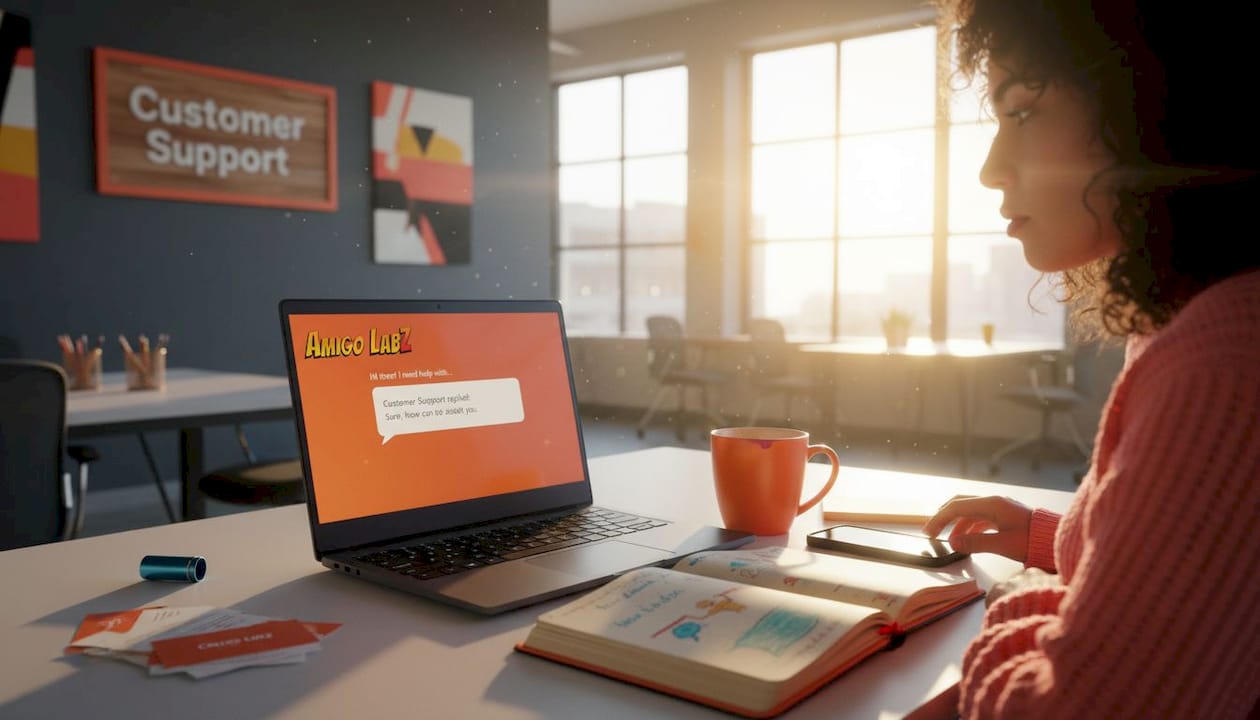
Speed matters more than channel preference. Customers do not necessarily care if they talk to you on Instagram or email, but they care a great deal about how fast their problem gets solved. AI can play a powerful role here, but only if it knows its limits. The number that should get your attention:
79% of customers would switch to a competitor after just one bad experience, often triggered by AI that fails to resolve an issue without a clear path to a human agent.
That stat changes how you should think about automation. AI is not a replacement for human support. It is a filter. Let it handle volume, then hand off quickly when it cannot resolve the issue. Younger customers (Gen Z and younger Millennials) are more open to AI-assisted support, but only when it actually works. A failed chatbot experience still costs you the customer.
For small businesses, this has a specific implication. You do not need a sophisticated AI platform. You need a clear escalation path. Make sure every automated touchpoint has an obvious "talk to a real person" option. Using data analytics smartly can also help you identify where automated interactions are failing so you can fix those gaps before they become defections.
Examples of effective customer engagement strategies through the lifecycle
Finally, let's look at how these types integrate into programs you can deploy throughout your customers' journey. The strongest engagement strategies share a common thread: they treat engagement as an ongoing process, not a one-time campaign.
Here are the lifecycle stages and the engagement types that perform best at each:
- Personalized onboarding: Welcome emails, setup guides, and a personal check-in within the first week activate new customers and reduce early drop-off. A boutique gym in Princeton that sends a personal text after a member's first class sees a measurably higher retention rate than one that sends nothing.
- Lifecycle automation: Triggered emails based on behavior (no purchase in 60 days, birthday approaching, product anniversary) keep your brand present without requiring manual effort.
- Re-engagement offers: When a customer goes quiet, a targeted offer with a "We miss you" message recovers a meaningful percentage. Pair this with reputation management outreach to turn a lapsed customer into a five-star review.
- Loyalty and rewards programs: Points, referral bonuses, and VIP perks are not just for big brands. A local restaurant in Sparks, Nevada can run a simple punch card digitally through a text-based rewards system.
- Proactive service communications: Notify customers before problems arise. Shipment delays, appointment changes, and product updates communicated proactively build far more trust than reactive apologies.
- Continuous experimentation: Test subject lines. Try different follow-up timing. Experiment with video vs. text in your onboarding. Small improvements compound over months into a dramatically better customer experience.
Comparing customer engagement types: which fit your small business best?
To wrap up the options, here is a detailed comparative view to help you choose which engagement types suit your business best. As a rule, engagement types must match your business scale, customer complexity, and available resources to be effective.
| Engagement type | Best business context | Resource need | Implementation complexity |
|---|---|---|---|
| High-touch | Premium service businesses, B2B | High | Moderate |
| Low-touch | E-commerce, subscription, high volume | Low | Low |
| Hybrid | Most NJ/NV small businesses | Medium | Medium |
| Segmentation-based | Businesses with diverse customer data | Medium | Medium-High |
| Automated/AI-driven | Fast-scaling or digital-first businesses | Medium | High |
| Community-based | Brand-loyal niches or local communities | Low ongoing | Medium |
For most small business owners in New Jersey and Nevada, the hybrid model is the right starting point. It gives you the scale you need without sacrificing the personal relationships that make local businesses thrive. As you grow, layering in segmentation-based tactics and selective automation becomes the natural next step. Exploring niche marketing approaches alongside your engagement model can sharpen your targeting even further.
Why prioritizing personalized, two-way engagement is the winning strategy for SMBs
Here is the perspective we keep coming back to after working with small business owners across New Jersey and Nevada: most engagement failures are not technology failures. They are communication failures.
Too many small businesses still treat engagement like a broadcast. They send promotions. They post on social media. They check off the boxes. But genuine engagement requires mechanisms that invite customer participation and feedback, not just outgoing messages. The businesses that grow consistently are the ones that make customers feel heard.
The uncomfortable truth is that automation alone will not build loyalty. It will maintain it, at best, if the relationship was already strong. The human moments matter most, especially early in the relationship. A follow-up call after a complaint, a personalized note when a client hits a milestone, a question asked in a social comment thread instead of a canned reply. These are the things customers remember and talk about.
We also see small businesses give up control of their customer relationships by relying entirely on third-party platforms. Your Instagram following is not your audience. Instagram owns that relationship. Your email list, your website, your loyalty app, those are owned channels, and building engagement through segmentation on platforms you control is the most durable long-term strategy.
Treat engagement as a loop, not a line. Listen to what customers tell you. Act on it. Then measure what changed. Then repeat. The businesses that do this consistently win the long game.
Enhance your customer engagement with expert digital marketing services
Ready to put these engagement insights into action? Understanding which engagement types fit your business is step one. Building and running the programs that deliver results is where most small business owners need a trusted partner.

At Amigo Labz, we work with small businesses in New Jersey and Nevada to design and run customer engagement strategies that actually move the needle. From Google Ads campaigns that bring in the right customers to Facebook Ads that build community awareness, we help you reach people where they are. Our social media management keeps your brand present and responsive across every public channel, while our SEO services ensure new customers can actually find you when they search. Every service connects back to one goal: building relationships that last longer than a single transaction.
Frequently asked questions
What are the most effective types of customer engagement for small businesses?
The most effective approach combines high-touch and hybrid models that pair personalized human interaction with scalable automation, supported by segmentation and loyalty programs tailored to your customer groups.
How can small businesses in NJ and NV use digital channels for customer engagement?
You can use digital customer interactions like social media, email, chatbots, and your website to deliver fast support, personalized content, and feedback collection that keeps customers connected between purchases.
Why is combining AI automation and human assistance important in customer engagement?
Because 79% of customers will switch to a competitor after one bad experience, AI needs a clear human escalation path to handle complex issues before they become lost customers.
How does customer engagement differ from customer experience?
Customer engagement refers to the active, ongoing interactions between your brand and your customers, while customer experience describes the customer's overall perception of every interaction across their journey with you.
What role do loyalty programs play in customer engagement?
Loyalty programs are a key engagement type throughout the customer lifecycle, and loyalty and rewards strategies consistently show up as critical components of retention-focused engagement programs for businesses of all sizes.
Recommended